Hidden Gems and Golden Light: Chasing Culture Through The Hague’s Most Photogenic Corners
Have you ever walked through a city and felt like every corner was begging to be photographed? That’s The Hague for you. Beyond its political reputation, this coastal Dutch city pulses with artistic energy and cultural depth. From sunlit canals to street art alleyways, I discovered moments that felt both intimate and iconic. If you're chasing authenticity through your lens, The Hague’s cultural photo spots are an absolute must-see. With its harmonious blend of historic architecture, seaside charm, and creative neighborhoods, the city offers a rich visual narrative waiting to be captured. This journey isn’t just about taking pictures — it’s about telling stories, one frame at a time.
The Hague Beyond Politics: A Visual Awakening
The Hague is often introduced as the city of peace and justice, home to international courts and diplomatic missions. Yet beyond the formal façade lies a city that breathes culture through its cobblestone streets, tree-lined canals, and vibrant public spaces. While Amsterdam dazzles with its canals and crowds, and Rotterdam impresses with its futuristic skyline, The Hague reveals itself slowly — like a well-composed photograph developing in light. Its beauty is understated, rooted in everyday life, and deeply accessible to those who take the time to look.
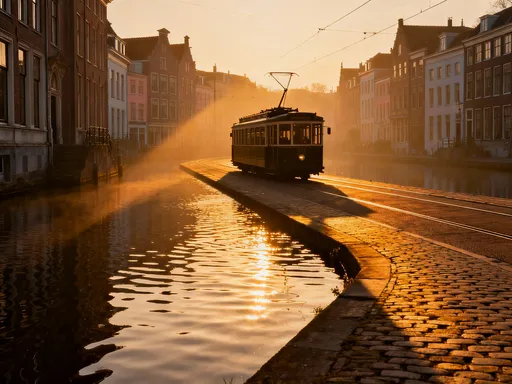
Walking through the city center, one quickly realizes that The Hague is not defined by grand monuments, but by the quiet poetry of its urban rhythm. A woman arranging tulips at a morning market, a child chasing pigeons near the Binnenhof, a tram gliding silently past gabled houses — these are the moments that shape its visual identity. The city’s cultural richness isn’t confined to museums; it spills into parks, courtyards, and seaside promenades. For photographers, this means endless opportunities to capture authenticity without staging or artifice.
What makes The Hague particularly rewarding for visual storytelling is its balance between order and spontaneity. Dutch urban planning emphasizes harmony — in color palettes, building heights, and public space design — which creates a naturally photogenic environment. At the same time, the city embraces creativity, from street art in hidden alleys to open-air installations in public squares. This duality allows photographers to explore both structured compositions and candid moments, making it an ideal destination for those who value both technical precision and emotional resonance in their work.
Moreover, The Hague’s proximity to the North Sea influences its light in subtle but profound ways. The coastal air diffuses sunlight, producing a soft, even glow that enhances colors and minimizes harsh shadows — a gift for photographers, especially during early morning and late afternoon. Whether shooting reflections in the Hofvijver pond or capturing the golden hue on 17th-century brickwork, the quality of light here adds a layer of depth that elevates every image. This interplay of light, architecture, and daily life forms the foundation of The Hague’s visual appeal.
Mauritshuis & The Old Masters: When Art Becomes Your Backdrop
The Mauritshuis stands as a masterpiece within a masterpiece. Housed in a 17th-century palace overlooking a serene pond, this world-renowned museum is home to some of the Dutch Golden Age’s most treasured paintings, including Vermeer’s Girl with a Pearl Earring and Rembrandt’s The Anatomy Lesson of Dr. Nicolaes Tulp. But beyond its priceless collection, the building itself is a subject worthy of the lens. Its symmetrical façade, framed by water and willow trees, becomes especially striking during golden hour, when the warm light bathes the sandstone in a honeyed glow and creates mirror-like reflections on the pond’s surface.
For photographers, capturing the exterior of the Mauritshuis requires patience and timing. Early morning visits offer the best chance for still water and minimal foot traffic, allowing for clean, unobstructed shots. A polarizing filter can help reduce glare and enhance the contrast between the building and its reflection. Shooting from the opposite bank of the pond provides a full frontal view, while slightly angled positions from the Hofvijver Park side allow for more dynamic compositions that include surrounding greenery and passing swans. These natural elements add depth and movement, transforming a static architectural shot into a living scene.
Inside the museum, photography is permitted in permanent galleries under specific conditions — no flash, no tripods, and images for personal use only. The challenge lies in capturing centuries-old paintings through glass without reflections. The key is positioning: approach the artwork at a slight angle, use a matte screen protector on your camera if possible, and ensure your body blocks overhead light sources. Natural illumination from the museum’s skylights enhances the viewing experience and can create a luminous effect on the canvas, especially when shooting during midday hours when sunlight filters gently through the ceiling.
Equally compelling is the surrounding area, particularly Hofvijver Park, a tranquil green space that wraps around the pond. From here, one can capture panoramic views that include the Mauritshuis, the Binnenhof (the Dutch parliament), and the modern glass dome of the Eerste Kamer. This juxtaposition of old and new — historic governance and contemporary transparency — is symbolic of The Hague itself. Photographing this skyline at dawn, when mist hovers above the water and the first light touches the rooftops, offers a powerful visual metaphor for continuity and change.
Scheveningen Beach: Where Sea, Sky, and Culture Collide
Scheveningen, The Hague’s seaside district, is a dynamic canvas of contrasts. The long stretch of sandy beach meets a bold horizon where sea and sky merge, while the urban landscape blends historic charm with modern energy. The iconic pier, extending 360 meters into the North Sea, serves as both a tourist attraction and a natural focal point for photography. At sunrise, when the beach is nearly empty and the sky shifts through pastel hues, the pier becomes a solitary silhouette — a perfect subject for long-exposure shots that emphasize stillness and scale.
The Kurhaus, a grand Belle Époque hotel with a colonnaded façade and sweeping wings, stands as a monument to early 20th-century elegance. Its symmetrical design and seaside location make it ideal for architectural photography. Capturing the building in soft morning light enhances its pale façade and casts delicate shadows across its terraces. From the beach, a wide-angle lens can include both the Kurhaus and the pier in a single frame, illustrating the harmony between leisure, history, and nature. During stormy weather, the same scene transforms into something dramatic — waves crashing against the seawall, clouds rolling in, and the hotel standing firm against the elements.
But Scheveningen is not just about landscapes. Its cultural vitality comes alive in the interactions between people and place. Fishermen still operate from the old harbor, mending nets and preparing boats — traditions passed down through generations. Nearby, beach clubs with modern designs and colorful umbrellas cater to a younger, cosmopolitan crowd. Photographing these contrasts — weathered hands beside sleek loungers, wooden fishing huts against glass-fronted cafés — tells a deeper story about continuity and change in coastal life.
For elevated perspectives, the top of the pier offers a panoramic view of the coastline, while the dunes at Kijkduin, a quieter area to the southwest, provide a more natural setting. Here, sand ridges and marram grass create textured foregrounds, and the sound of wind replaces city noise. These dunes are especially photogenic in autumn and winter, when low sunlight accentuates their contours and lone walkers leave footprints in the sand. Seasonal events, such as the summer beach festivals or winter bonfire nights, add cultural layers worth documenting — not just for their visual appeal, but for the sense of community they reflect.
De Passage and the Heart of City Center Street Life
Opened in 1884, De Passage holds the distinction of being the Netherlands’ first covered shopping arcade, a blend of 19th-century elegance and contemporary urban life. Its glass-vaulted ceiling allows natural light to flood the interior, creating a luminous environment ideal for street photography. Unlike open-air markets, this enclosed space offers protection from rain while maintaining a sense of openness — a rare combination that enhances both comfort and image quality.
The arcade buzzes with activity throughout the day. Locals browse independent bookshops, pause at café tables with cappuccinos, or stop to listen to buskers near the central plaza. These moments of pause and interaction are gold for photographers seeking authentic human expressions. The key is discretion — using a compact camera or a telephoto lens to capture candid scenes without intrusion. Early afternoon light, streaming through the glass roof, casts soft highlights and gentle shadows, enhancing facial expressions and textures in clothing and architecture.
Reflections play a significant role in De Passage photography. Shop windows become dynamic surfaces that layer foreground and background — a woman adjusting her scarf in real time, mirrored against a man reading a newspaper inside a café. These double exposures, created in-camera rather than in post-processing, add complexity and narrative depth. Shooting at a slight angle minimizes direct glare while preserving clarity, and a polarizing filter can further reduce unwanted reflections.
The surrounding streets — Groenesteeg, Grote Marktstraat, and Spui — extend the visual narrative beyond the arcade. Hidden courtyards, known as hofs, open unexpectedly behind unassuming doors, revealing quiet gardens and centuries-old buildings. These spaces, often overlooked by tourists, offer intimate settings for photography. Additionally, street art flourishes in alleys like the Spuiallee, where murals and stencils add color and social commentary to gray walls. Together, these elements form a rich tapestry of urban life, where history, commerce, and creativity coexist.
Fotomuseum Den Haag: Inspiration in Every Frame
For photographers, visiting the Fotomuseum Den Haag is both a source of inspiration and a photographic subject in itself. Located in the scenic Westbroekpark, the museum occupies a modernist building with clean lines and large glass facades, surrounded by trees and seasonal flowers. Its exhibitions rotate regularly, showcasing everything from historical photojournalism to contemporary digital art, offering fresh perspectives that can influence one’s own approach to image-making.
The building’s architecture invites creative compositions. The cubic design, with its interplay of light and shadow, is especially striking during midday when the sun hits the façade at sharp angles. Reflections in the glass capture passing clouds and treetops, blending nature with structure. From certain vantage points, the museum appears to float within the park, its transparency dissolving the boundary between interior and exterior. These visual effects are ideal for abstract or minimalist photography.
Inside, photography is permitted in most exhibition areas, again without flash and for personal use. This allows visitors to study not only the content of the images but also their presentation — framing, lighting, sequencing — all of which can inform one’s own curatorial thinking. Exhibits often explore cultural themes such as identity, migration, or urban change, encouraging photographers to consider the deeper messages behind their own work.
The surrounding Westbroekpark enhances the experience. Pathways meander through flower beds, past sculptures, and alongside a small pond where ducks glide silently. In spring, tulips bloom in vibrant rows; in autumn, fallen leaves carpet the ground in red and gold. These natural elements provide peaceful counterpoints to the city’s urban energy and offer excellent opportunities for macro and landscape photography. The park is also popular with families and dog walkers, adding gentle human elements to the scenery without overwhelming it.
Wandering the Loosduinen and Mariahoeve Neighborhoods: Offbeat and Authentic
Just a short tram ride from the city center, Loosduinen and Mariahoeve offer a quieter, more residential side of The Hague. These neighborhoods are not on most tourist maps, yet they embody the everyday charm that defines Dutch urban life. Rows of colorful houses with flower boxes, corner bakeries emitting the scent of fresh stroopwafels, and community gardens tended by neighbors — these are the textures of authentic living.
Photographing in residential areas requires sensitivity and respect. The goal is not to intrude, but to observe and honor the rhythm of daily life. Early mornings are ideal — when sunlight slants across brick walls and bicycles sit neatly by doorsteps. A simple scene, such as a child’s drawing taped to a window or laundry fluttering in the breeze, can convey warmth and intimacy. These small details, often overlooked, become powerful symbols of culture when framed with intention.
Local markets, like the weekly one in Loosduinen, provide natural opportunities for street photography. Vendors arrange fruits and cheeses with care, elderly shoppers bargain politely, and dogs sit patiently under tables. These interactions are unhurried and genuine, a contrast to the commercialized markets in tourist zones. Using a zoom lens allows photographers to capture expressions and gestures from a respectful distance, preserving the dignity of the subjects while maintaining image quality.
Mariahoeve, with its mix of 20th-century housing and green spaces, offers a different aesthetic — more structured, yet equally warm. Tree-lined avenues and communal playgrounds reflect the Dutch emphasis on livability and social cohesion. Photographing here during golden hour enhances the warmth of brick and stucco, while long shadows add depth to architectural lines. These neighborhoods remind us that culture is not only found in museums and monuments, but in the way people live, care for their spaces, and connect with one another.
Putting It All Together: Crafting Your Cultural Photo Journey
Planning a photography-focused visit to The Hague requires more than just a camera — it demands intention, timing, and respect. The ideal seasons for shooting are spring and autumn. Spring brings blooming tulips, soft light, and lively markets, while autumn offers golden hues, dramatic skies, and fewer crowds. Summer can be pleasant, but midday sun may create harsh contrasts; early morning or late afternoon shoots are recommended. Winter, though colder, provides moody atmospheres and unique opportunities during foggy or snowy conditions.
In terms of gear, a lightweight setup is advisable. A versatile zoom lens (24-70mm) covers most scenarios, from wide street scenes to tighter portraits. A prime lens (50mm) excels in low light and produces beautiful background blur. A polarizing filter helps manage reflections in water and glass, while a compact tripod can be useful for long exposures at the beach or in low-light interiors. Most importantly, a notebook or digital log to record locations, lighting conditions, and personal reflections can deepen the creative process.
When photographing people, always prioritize consent and dignity. In public spaces, candid shots are generally acceptable, but if someone notices and appears uncomfortable, it’s best to lower the camera or offer a smile. In markets or residential areas, a simple nod or gesture of acknowledgment goes a long way. The goal is not just to capture images, but to build a respectful relationship with the places and people being photographed.
A suggested one-day itinerary could begin at Scheveningen at sunrise, followed by a tram ride to the Mauritshuis for morning light on the pond. After a coffee break in De Passage, spend the afternoon exploring the Fotomuseum and Westbroekpark. End the day in Loosduinen, capturing golden-hour scenes in quiet streets. This route balances variety in subject, light, and mood, offering a comprehensive visual experience.
Ultimately, photographing The Hague is about more than aesthetics — it’s a way of seeing, remembering, and connecting. Each image becomes a fragment of a larger story, a testament to the city’s quiet elegance and cultural richness. Through the lens, we don’t just document beauty; we learn to appreciate the subtle details that give a place its soul. In The Hague, those details are everywhere — waiting, like light through a glass roof, to be noticed.