You Won’t Believe What Nairobi’s Art Scene Is Hiding
Nairobi isn’t just Kenya’s bustling capital—it’s a cultural heartbeat pulsing with color, rhythm, and raw creativity. I went looking for art and found soul. From graffiti-covered alleys to buzzing studios where paint flies and stories unfold, this city immerses you in authenticity. Forget sterile galleries; here, culture lives in dance, music, and the hands of local makers. If you think you know African art, think again—Nairobi will rewrite your definition, one bold stroke at a time.
Stepping Into Nairobi: More Than a Gateway to the Wild
Most travelers arrive in Nairobi with one destination in mind: the Maasai Mara or Amboseli National Park. They see the city as a necessary stopover, a place to rest before chasing lions or watching elephants at sunrise. But this perspective overlooks a deeper truth—Nairobi is not just a launchpad for safaris; it is a living canvas of creativity, identity, and cultural evolution. Beyond the traffic and high-rises lies a city that breathes through its artists, musicians, dancers, and storytellers.
The contrast between expectation and reality is striking. While Kenya’s wildlife draws global attention, Nairobi’s art scene offers something equally powerful: a human story. It reflects the resilience, humor, and imagination of a generation shaping its own narrative. Young creatives are redefining what it means to be Kenyan in the 21st century, blending ancestral traditions with urban energy. This fusion isn’t accidental—it’s intentional, bold, and deeply personal.
Shifting focus from animals to art transforms the travel experience. Instead of observing nature from a jeep, you engage with people in their studios, markets, and performance spaces. You hear firsthand how a mural in Kibera comments on education inequality, or how a textile pattern carries a grandmother’s wisdom. These moments create connection, not just observation. They invite you into conversations that last long after the trip ends.
What makes Nairobi’s cultural ecosystem thrive is its accessibility. Unlike distant game reserves, art here is woven into daily life. You don’t need a guided tour to stumble upon it—though guided tours can deepen understanding. A walk down Ngong Road might lead you to an open-air exhibition; a detour in Westlands could bring you face-to-face with a kinetic sculpture made from scrap metal. The city rewards curiosity and movement, offering surprises around every corner.
The Pulse of Street Art: Murals That Speak Truth
If Nairobi’s soul has a voice, it speaks loudest on its walls. Street art in the city is not decoration—it’s dialogue. In neighborhoods like Kibera, one of Africa’s largest urban settlements, murals rise above narrow alleyways, turning concrete into confessionals. These vibrant compositions carry messages about justice, hope, youth empowerment, and environmental awareness. Each brushstroke tells a story shaped by lived experience, often created by artists who have turned hardship into vision.
Take the mural at the entrance of the Kibera Public Space Project—a massive painting of a young girl holding a book, her eyes fixed forward with determination. Behind her, a cascade of colors represents knowledge, opportunity, and transformation. This piece was painted by a collective of local artists supported by international partners, but the idea came from the community itself. It reflects a shared belief: education is the key to change. Passersby pause, some smile, others point it out to children. It’s not just seen—it’s felt.
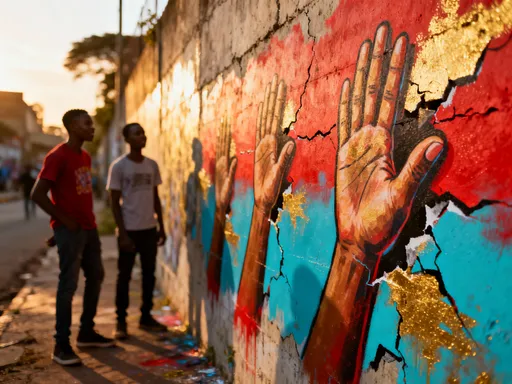
Eastleigh, another dynamic neighborhood known for its entrepreneurial spirit, has also become a hub for politically charged street art. Here, murals address themes like unity, corruption, and peacebuilding. One striking piece shows hands of different skin tones lifting a globe, inscribed with the Swahili phrase “Pamoja Tunaweza”—Together We Can. The artwork emerged after a period of intercommunity tension, serving as a visual call for reconciliation. It stands as proof that public art can be both healing and provocative.
Collectives like the Ghetto Film School and Murals Without Borders have played pivotal roles in nurturing this movement. They provide training, materials, and platforms for young artists to develop their skills and amplify their voices. These organizations do not impose themes; instead, they facilitate conversations and let the community guide the message. The result is authenticity—art that resonates because it comes from within, not from outside expectations.
Walking through these neighborhoods with a local guide transforms a simple stroll into an immersive lesson in social history. You learn how spray paint becomes resistance, how color challenges apathy, and how public spaces can be reclaimed for beauty and meaning. It’s a reminder that art does not belong only in museums—it belongs where people live, struggle, dream, and celebrate.
Inside the Studios: Where Creativity Takes Shape
Behind closed doors and tucked inside converted warehouses, Nairobi’s artists are shaping the future of African expression. These studios are not just workspaces—they are sanctuaries of experimentation, where tradition meets innovation in unexpected ways. Places like Kuona Trust and The Circle Art Gallery offer more than exhibition space; they provide residencies, mentorship, and cross-cultural exchange programs that empower emerging talent.
At Kuona Trust, located in the heart of the city, artists work with mixed media, combining found objects, natural pigments, and digital tools. One sculptor uses discarded car parts to create intricate figures that dance in the wind, their metallic limbs catching sunlight like prayer flags. Another painter layers canvas with soil from different regions of Kenya, embedding the land itself into the artwork. These materials are not chosen for novelty—they carry symbolism, memory, and a deep connection to place.
The creative process here is rarely solitary. Collaboration is central. Artists share ideas, critique each other’s work, and often co-create large-scale installations. This sense of community strengthens not only individual practice but also the broader artistic ecosystem. When one artist gains recognition, the ripple effect lifts others. International curators now regularly visit these spaces, drawn by the originality and emotional depth of the work.
Visitors are often welcome, especially during open studio events or artist talks. These moments offer rare access to the mind behind the masterpiece. You might hear a painter explain how her grandmother’s beadwork inspired her geometric patterns, or a photographer discuss how he captures the quiet dignity of elderly women in rural villages. These stories add layers to the visual experience, making the art more meaningful.
What stands out in Nairobi’s studios is the absence of pretense. There are no white gloves or hushed tones. Creativity unfolds in real time, sometimes messy, always honest. An unfinished canvas leans against the wall, paint splattered on the floor, music playing in the background. This is art in motion—alive, evolving, and deeply human.
Markets of Meaning: Craft, Culture, and Connection
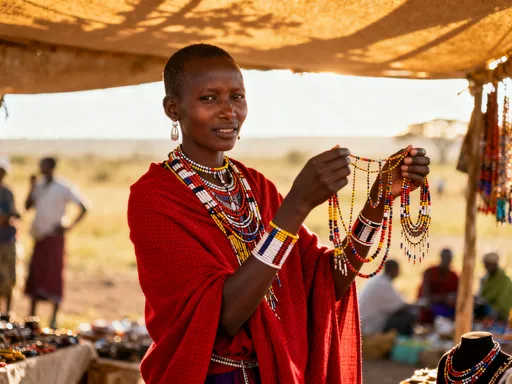
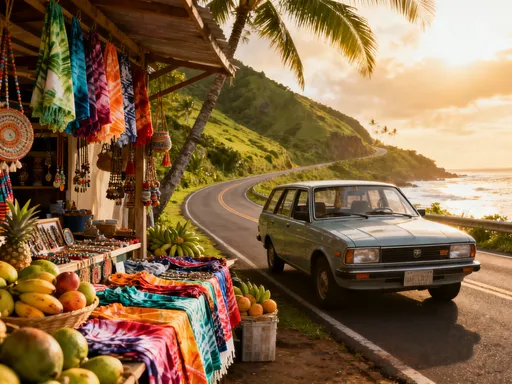
Nairobi’s markets are more than shopping destinations—they are living archives of cultural memory. At places like the Maasai Market, which operates in different locations throughout the week, artisans from across Kenya gather to sell handmade jewelry, woven baskets, carved masks, and colorful textiles. Each item carries a story, often passed down through generations. A beaded necklace isn’t just adornment; it may signify age, marital status, or clan identity among the Maasai people.
Shopping here is not transactional—it’s relational. Vendors welcome questions, happy to explain the significance of patterns or the process of crafting a sisal basket. Some demonstrate techniques on the spot, letting visitors touch raw materials and see how dyes are made from plants and minerals. This interaction fosters respect and understanding, turning a simple purchase into a moment of cultural exchange.
Ethical engagement matters. Fair pricing ensures that artisans receive just compensation for their labor, preserving the dignity of their craft. Bargaining is common, but it should be done with kindness and awareness. A thoughtful traveler asks, “What is a fair price?” rather than aiming for the lowest number. Supporting cooperatives or women-led collectives—such as those producing recycled paper notebooks or eco-friendly sandals—multiplies the positive impact.
The Nairobi Gallery Shop, located within the Nairobi National Museum, offers another avenue for responsible shopping. Here, proceeds directly support local artists and cultural preservation projects. Items are curated for quality and authenticity, with detailed descriptions about origin and meaning. It’s an ideal place for travelers seeking meaningful souvenirs—something that will spark conversation long after the journey ends.
Buying art in Nairobi does more than fill a suitcase—it sustains livelihoods, funds education, and keeps traditions alive. When a young woman sells her first painting, she may use the income to buy school supplies for her siblings. When a woodcarver earns fair pay, he reinvests in better tools and trains apprentices. Every purchase becomes a quiet act of solidarity, a way to honor creativity and resilience.
Rhythm & Movement: Dance and Music as Living Art
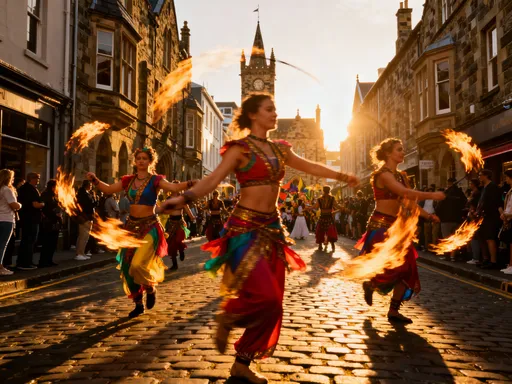
In Nairobi, art doesn’t hang on walls—it moves through bodies and pulses through sound. Traditional dance and music are not performances for tourists; they are expressions of identity, spirituality, and community. At the Bomas of Kenya, a cultural center dedicated to preserving indigenous heritage, nightly performances showcase dances from over 40 ethnic groups. The rhythms vary—some fast and energetic, others slow and ceremonial—but all share a deep connection to land, history, and ritual.
Watching a Luo dance, with its fluid hip movements and storytelling gestures, is like witnessing poetry in motion. The drummers, seated in a tight circle, create complex polyrhythms that seem to speak directly to the soul. Dancers wear traditional attire—beaded skirts, ostrich feather headdresses, ankle rattles—each element carrying symbolic meaning. The audience claps, sings along, sometimes joins in. There’s no barrier between performer and spectator; everyone is invited into the circle.
Meanwhile, Nairobi’s underground music scene thrives in neighborhoods like Kileleshwa and Kilimani. Small venues host live bands playing genres that blend local roots with global influences. Benga, a guitar-driven style originating in western Kenya, pulses with energy and social commentary. Afro-jazz fuses Swahili lyrics with saxophone solos and syncopated beats. Hip-hop artists rap in Sheng, a dynamic urban slang, addressing issues like unemployment, love, and city life.
These spaces are intimate, often packed with young Kenyans who come not just to listen but to belong. The air vibrates with drumbeats, laughter, and shared energy. For visitors, attending a live show is a powerful way to connect with contemporary Nairobi. It’s raw, unfiltered, and full of life. You don’t need to understand every word to feel the emotion—the music speaks in universal tones of joy, struggle, and hope.
Dance and music in Nairobi are not relics of the past; they are evolving forms. New generations reinterpret traditions, adding electronic elements or choreographing fusion pieces that honor roots while embracing change. This balance between preservation and innovation is what makes the city’s artistic pulse so strong.
Immersive Experiences: How to Truly Engage (Not Just Observe)
To truly understand Nairobi’s art scene, you must step beyond observation and into participation. Immersion begins with intention—choosing experiences that foster connection rather than spectacle. Joining a painting workshop at Kuona Trust allows you to try your hand at abstract expression using local pigments. Guided by an artist, you learn techniques while discussing inspiration, challenges, and dreams. The focus isn’t on creating a masterpiece but on sharing a creative moment.
Attending an open mic night at a café in Lavington or an indie music gig in Westlands offers another doorway. These events are low-cost, welcoming, and full of authenticity. You’ll hear poets recite verses about identity and belonging, musicians experiment with new sounds, comedians weave humor with social insight. Sitting among locals, sipping chai, you become part of the audience—not a distant observer, but a present witness.
For deeper engagement, consider booking a cultural home-stay through community-based tourism initiatives. Staying with a local family in a neighborhood like Lang’ata or Karen provides insight into daily life, values, and creative traditions. You might learn to weave a basket, cook a traditional meal, or dance a simple step. These moments build bridges, dissolving the tourist-local divide.
Language also opens doors. Learning a few Swahili phrases—like “Habari yako?” (How are you?), “Asante” (Thank you), or “Mambo?” (What’s up?)—shows respect and invites warmth. People respond to effort, even if pronunciation isn’t perfect. A smile and a simple greeting can lead to longer conversations, unexpected invitations, and richer experiences.
Timing your visit with cultural events enhances immersion. Nairobi Art Week, held annually, brings together galleries, artists, curators, and collectors for exhibitions, talks, and performances. The Nairobi International Film Festival showcases African cinema, including works by young directors from informal settlements. These gatherings offer front-row seats to the city’s creative heartbeat.
The goal is not to check off attractions but to slow down, listen, and engage with presence. When you participate, you don’t just see Nairobi—you feel it. You carry a piece of it with you, not as a souvenir, but as a memory etched in emotion and connection.
Why This Matters: Preserving Culture Through Travel
Tourism has the power to either exploit or empower. When travelers seek only surface-level experiences, cultures risk being reduced to clichés—dances performed on demand, crafts mass-produced for export, traditions stripped of meaning. But when tourism is mindful, it becomes a force for preservation and dignity. In Nairobi, visitor interest in authentic art directly supports sustainability, education, and pride.
Every dollar spent at a local market, every ticket bought for a live performance, every workshop attended sends a message: your art matters. This demand encourages investment in creative education, from primary schools to university programs. It inspires young people to pursue careers in the arts, knowing there is an audience and a future. It also strengthens cultural identity, especially among youth navigating globalization.
Global recognition follows. As Nairobi’s artists gain visibility through exhibitions, residencies, and collaborations, they bring international attention to Kenyan creativity. This visibility counters outdated narratives that focus only on poverty or wildlife. Instead, it presents Kenya as a center of innovation, resilience, and beauty.
But recognition must come with responsibility. Travelers have a role in ensuring that engagement is respectful and reciprocal. This means asking permission before photographing people, avoiding exoticizing language, and supporting initiatives led by local communities. It means valuing process over product, story over spectacle.
When done right, cultural travel transforms both host and guest. The traveler leaves with more than photos—they carry new perspectives, deeper empathy, and a sense of connection. The artist gains validation, resources, and a platform. The community benefits from economic support and cultural pride. It’s a cycle of mutual uplift, rooted in dignity and shared humanity.
Nairobi’s art and culture aren’t side attractions—they are the heart of the city. To experience them is to see Kenya with new eyes, to feel its pulse, and to leave changed. The real journey isn’t about ticking boxes; it’s about opening yourself to stories told in color, sound, and motion. Go not just to look—but to belong, even if just for a moment.