You Won’t Believe What I Ate in Dushanbe — A Foodie’s Check-In
When I stepped into Dushanbe, I didn’t expect much from the food scene — boy, was I wrong. From bustling bazaars to cozy family-run spots, the city’s dining experience hit me like a flavor bomb. Think juicy kebabs, fragrant pilafs, and flatbreads baked fresh every hour. This isn’t just a meal; it’s a cultural handshake on a plate. If you're checking in here, don’t just pass through — eat like a local. What I discovered was more than sustenance; it was a story told through spices, shared over steaming plates, and rooted in centuries of tradition. Dushanbe, the quiet capital nestled between mountains and history, revealed its soul one bite at a time.
First Impressions: Landing in Dushanbe and the Unexpected Food Vibe
Touching down at Dushanbe International Airport, the first thing that strikes you is the stillness. Unlike the chaotic energy of other regional hubs, this city unfolds at a gentler pace. The drive into the city center reveals wide boulevards flanked by Soviet-era architecture softened by climbing vines and modern cafes tucked into pastel-colored buildings. My initial impression was one of quiet dignity — but gastronomically? I wasn’t sure what to expect. Tajikistan doesn’t dominate food travel headlines, and few guidebooks dedicate extensive pages to its cuisine. That uncertainty quickly dissolved with my first real meal.
Just a short walk from my hotel, I stumbled upon a modest roadside chaykhona — a traditional tea house that functions as both café and community living room. Wooden benches lined the entrance, and the scent of cardamom and grilled lamb drifted into the street. I pointed at what a local was eating — a platter of flatbread soaked in a creamy yogurt sauce, topped with fresh herbs and thin strips of chicken. That dish was qurutob, often considered the national dish of Tajikistan. The first bite was revelatory: cool, tangy, savory, and herbaceous all at once. The texture of the slightly chewy bread soaked in rich qurut (dried yogurt balls reconstituted into a sauce) was unlike anything I’d tasted before. It was humble, nourishing, and deeply flavorful.
This moment crystallized a truth I’ve come to appreciate through years of travel: food is the fastest, most honest way to understand a culture. Unlike monuments or museums, meals unfold in real time, shared with people in their everyday lives. In Dushanbe, where history has layered Persian, Soviet, and Central Asian influences, the cuisine reflects resilience, generosity, and an enduring connection to the land. Every dish carries echoes of the Silk Road, where spices traveled for thousands of miles and recipes evolved through exchange and necessity. What I thought would be a brief stopover became a culinary awakening.
The Heartbeat of Flavor: Exploring Rudaki Avenue’s Dining Scene
If Dushanbe has a culinary spine, it’s Rudaki Avenue — the city’s main boulevard, named after the revered 10th-century Persian poet. By day, it’s a corridor of government buildings and quiet parks. But as the sun dips behind the Pamir Mountains, the avenue transforms. Outdoor seating spills onto sidewalks, string lights flicker to life, and the air fills with the sizzle of skewers turning over open flames. This is where locals gather not just to eat, but to see and be seen, to unwind after work, and to celebrate the simple joy of a shared meal.
One evening, I followed the crowd into a mid-range restaurant with white-clothed tables and a menu printed in both Tajik and Russian. The waiter, wearing a crisp white shirt and a welcoming smile, brought a small dish of radishes and a basket of still-warm lepyoshka — the round, dimpled flatbread stamped with a floral pattern that’s a staple across Central Asia. As I nibbled the bread, I studied the menu. I ordered sambusa, the Central Asian cousin of the samosa, filled with spiced lamb and onion; laghman, a hand-pulled noodle dish in a savory broth with vegetables and beef; and, of course, another serving of qurutob, this time with egg and greens.
What struck me wasn’t just the taste — though each dish was impeccably seasoned — but the care in presentation and service. The sambusa arrived golden and crisp, arranged on a bed of shredded lettuce with a side of tangy tomato sauce. The laghman was served in a wide bowl, the noodles springy and the broth rich with depth. And the qurutob? This version was more elaborate, with layers of herbs and a perfectly boiled egg sliced on top. The waiter explained each dish with pride, pointing out the use of locally grown onions, hand-churned butter, and herbs picked that morning. In that moment, I realized that in Tajik culture, feeding someone is an act of respect. A meal isn’t rushed; it’s lingered over, offered generously, and enjoyed with gratitude.
This emphasis on hospitality transforms even a simple dinner into something meaningful. It’s not about extravagance, but intention. Whether in a high-ceilinged restaurant or a roadside stall, the same principle holds: you are a guest, and you are valued. For travelers, especially women traveling solo or families seeking authentic connection, this warmth is both comforting and memorable. Rudaki Avenue, with its blend of tradition and modernity, offers a window into how Dushanbe honors its roots while stepping confidently into the present.
Market Magic: The Soul of Dushanbe at the Central Asian Bazaar
No understanding of Dushanbe’s food culture is complete without a visit to the Central Asian Market — commonly known as Baraki Market — a sprawling labyrinth of stalls that hums with life from dawn to dusk. More than just a place to buy groceries, it’s a living museum of taste, texture, and tradition. Walking through its covered aisles, I was surrounded by pyramids of dried apricots, walnuts the size of small plums, and sacks of saffron so vibrant they seemed to glow. Vendors called out in Tajik and Uzbek, their voices rising above the clatter of baskets and the occasional bleat of a goat being led to a butcher.
The market’s true magic lies in its immediacy. Here, food isn’t packaged or processed — it’s alive. I watched a woman shape dough into perfect circles before slapping them onto the walls of a tandoor oven. Minutes later, she handed me a warm lepyoshka, its crust crackling under my fingers. Nearby, a man crushed dried qurut in a mortar, releasing a sharp, fermented aroma that reminded me of aged cheese. Another stall displayed wheels of the stuff like artisanal breads, ready to be crumbled into soups or sauces. This is where the foundation of Tajik cuisine is built: from scratch, by hand, and with pride.
I couldn’t resist sampling as I wandered. A vendor offered a freshly fried sambusa, its pastry blistered and flaky, filled with a savory mix of potato and cumin. Another handed me a paper cone of roasted pumpkin seeds, still warm. At a sweets stall, I tasted baklava made with local honey and layered with crushed almonds — less sweet than Turkish versions, more floral and delicate. Each bite felt like a small celebration, a gift from the city itself.
But beyond the food, the market is a social engine. Women bargain with ease, their laughter ringing across aisles. Grandfathers pause to inspect melons, tapping them like connoisseurs. Children dart between stalls, clutching sticky fingers after a treat. For families, this is where meals are planned, traditions are passed down, and community is reinforced. As a visitor, I felt welcomed not as a tourist, but as a participant. One vendor, noticing my curiosity, invited me to taste a spoonful of thick sheep’s milk yogurt. “This is how we eat at home,” she said through a translator. That simple phrase — this is how we eat at home — became the heartbeat of my journey.
Hidden Gems: Off-the-Beaten-Path Eateries Only Locals Know
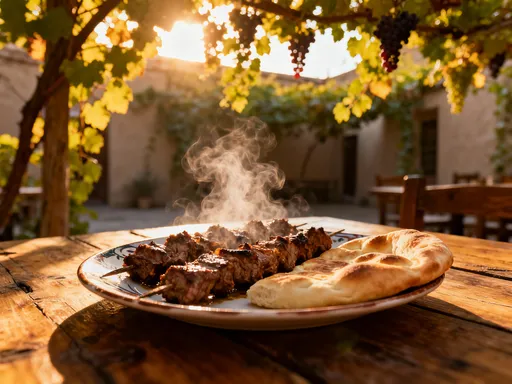
Sometimes, the most memorable meals aren’t found in guidebooks or on Google Maps. They’re discovered through a smile, a gesture, or a whispered recommendation. In Dushanbe, I found one such treasure near the National Library, down a narrow alley where laundry hung between balconies and cats napped in sunlit corners. There was no sign, no menu posted outside — just a wooden table set in a small courtyard, shaded by a grapevine. A woman in her fifties, wearing an apron dusted with flour, waved me in with a nod.
This was a home kitchen opened to travelers through word of mouth, part of a quiet network of family-run eateries that operate more like culinary salons than restaurants. I took a seat as she brought a glass of ayran, the chilled yogurt drink that cuts through rich flavors. Then came the meal: tender shashlik — marinated lamb skewers grilled over charcoal — so juicy they nearly melted. Beside them, a vibrant achiq salad of diced tomatoes, onions, cucumbers, and fresh cilantro, dressed only with lemon and salt. A bowl of homemade compote followed, made from red plums simmered with a hint of cinnamon, served cold.
Every element tasted of care. The meat had been marinated overnight in onion juice and coriander, the salad was chopped just minutes before serving, and the compote carried the warmth of a grandmother’s kitchen. As I ate, the woman’s daughter joined me, speaking broken English and eager to practice. We shared stories — hers about school, mine about travel. She asked if I liked Tajik food. “It’s the best I’ve ever had,” I said, and meant it.
These unmarked kitchens are often the most authentic expressions of a culture’s cuisine. Free from the pressures of tourism or commercialization, they serve food the way it’s meant to be: simple, seasonal, and soulful. For travelers, especially those seeking connection beyond the surface, these moments are priceless. They remind us that the heart of travel isn’t in ticking off landmarks, but in sharing a table with someone whose life is different from ours — and finding common ground in a shared meal.
Modern Twists: Where Tradition Meets Trend in Dushanbe’s New Cafés
While Dushanbe cherishes its culinary heritage, a new wave of creativity is quietly reshaping its food scene. A growing number of young chefs and entrepreneurs are opening stylish cafés that honor tradition while embracing modern tastes and global influences. These spaces — with their minimalist decor, artisanal coffee, and Instagram-worthy plating — cater to a younger, urban crowd but remain deeply rooted in local identity.
I visited one such café tucked behind a bookstore in the city center. The walls were painted white, shelves lined with cookbooks, and soft jazz played in the background. The menu was bilingual and inventive: pumpkin-filled dumplings served with sour cream and dill; rosewater lattes dusted with edible petals; and a deconstructed qurutob presented on a slate board like a culinary art piece. I ordered the dumplings and a glass of fresh pomegranate juice. The dumplings were delicate, the filling sweet and earthy, the broth rich with saffron. It was familiar yet surprising — a tribute to tradition, not a departure from it.
What impressed me most was the intention behind the innovation. These chefs aren’t replacing Tajik cuisine — they’re expanding its vocabulary. They use local ingredients — mountain honey, wild herbs, organic dairy — but present them in ways that appeal to both locals and visitors seeking something fresh. For families, these cafés offer a comfortable space to introduce children to traditional flavors in a modern setting. For solo travelers, they provide a calm refuge with excellent coffee and warm service.
This evolution is a sign of cultural confidence. When a cuisine is strong enough to adapt without losing its essence, it thrives. Dushanbe’s new food spaces aren’t erasing the past — they’re building on it. And for travelers, this means more ways than ever to experience the depth and versatility of Tajik flavors, whether in a centuries-old chaykhona or a sleek downtown café.
Practical Tips: How to Navigate Dushanbe’s Food Scene Like a Pro
For travelers planning a visit, a few practical insights can make all the difference in enjoying Dushanbe’s food scene safely and authentically. First, timing matters. Lunch is typically eaten later than in Western countries — around 2:00 PM is peak time, when families gather and restaurants are fullest. Dinner starts early, often by 7:00 PM, especially in residential areas where nightlife is low-key.
Cash is still king. While some mid-range restaurants and hotels accept cards, most markets, street vendors, and family kitchens operate on a cash-only basis. It’s wise to carry small denominations of Tajik somoni, the local currency, to make transactions smoother. Tipping is appreciated but not mandatory — leaving 10% at a restaurant or rounding up the bill at a café is considered generous.
When choosing where to eat, follow the locals. A crowded chaykhona at lunchtime is a good sign. Look for places where food is prepared fresh in front of you — grilled meats, baking bread, chopped salads. Avoid dishes that have been sitting out for hours, especially in warmer months. If you have a sensitive stomach, stick to cooked foods, bottled water, and freshly brewed tea. Yogurt-based drinks like ayran are not only delicious but also help with digestion.
Language can be a bridge. While many younger people speak some English, learning a few basic phrases in Tajik or Russian goes a long way. “Rahmat” means thank you. “Man mushkiram” means I am full. “In chist?” means “What is this?” — a useful phrase when pointing at something delicious on a menu or stall. A smile and a polite tone will always be met with kindness.
Must-try dishes include qurutob, sambusa, shashlik, laghman, and plov — the fragrant rice dish cooked with carrots, raisins, and meat, often served at celebrations. For dessert, sample halva, baklava, or fresh fruit compotes. And don’t leave without trying green tea — served in clear glasses with a slice of lemon, it’s the soul of Tajik hospitality.
Beyond the Plate: How Dining Connects You to People and Place
As my days in Dushanbe unfolded, I realized that the meals were never just about the food. They were about the woman who insisted on refilling my tea, the grandfather who shared his plate of melon, the children who giggled when I tried to pronounce “qurutob” correctly. Each meal was a thread in a larger tapestry of human connection.
Food, in its purest form, is a bridge. It transcends language, dissolves formality, and invites intimacy. In a world that often feels divided, breaking bread together remains one of the most powerful acts of trust and friendship. In Dushanbe, where generosity is woven into the fabric of daily life, this truth is lived every day.
There’s an emotional resonance that comes from tasting something deeply authentic — not staged for tourists, not altered for foreign palates, but served exactly as it is at home. That authenticity is what stays with you long after the trip ends. It’s not just the flavor of saffron or the smell of baking bread — it’s the memory of being welcomed, of being seen, of being fed with care.
Dushanbe may not be on every foodie’s radar. It doesn’t have Michelin stars or viral food trends. But it has something rarer: honesty, warmth, and a cuisine that tells the story of a people shaped by mountains, history, and hospitality. If you’re checking in here, don’t just pass through. Sit down. Share a meal. Let the flavors guide you. You won’t just taste Dushanbe — you’ll remember it.