You Won’t Believe What I Ate in Sapa’s Hidden Mountain Villages
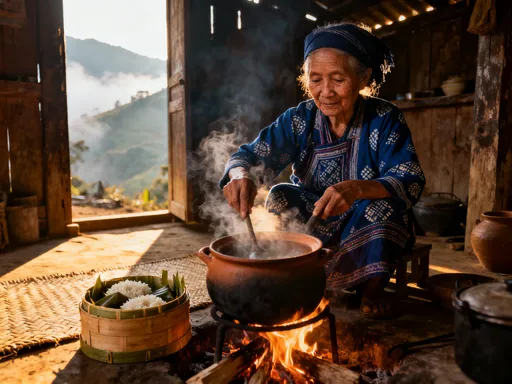
Tucked in the misty highlands of northern Vietnam, Sapa is more than just rice terraces and trekking trails. I went off the beaten path and discovered a food culture that’s alive, raw, and deeply tied to the land. From smoky open-fire stews to sticky rice steamed in bamboo, every bite told a story. This isn’t tourist-menu stuff — this is real, family-shared, hand-prepared mountain cuisine you have to taste to believe. The air was cool and damp, thick with the scent of woodsmoke and fermenting herbs, as I followed a narrow footpath into a village where time moves differently. Children ran barefoot past wooden stilt houses, and elders stirred pots over open flames, their faces etched with stories older than the hills. Here, food is not a commodity but a ritual — one shaped by seasons, terrain, and centuries of tradition. What I tasted in these hidden valleys wasn’t just nourishment. It was memory, identity, and resilience served on a plate.
Beyond the Tourist Trail: Finding Sapa’s True Heart
Sapa is often celebrated for its panoramic views of cascading rice fields and the charm of its hill tribe markets. Yet, for all its popularity, much of the region’s authentic life remains unseen by the average traveler. The bustling streets of Sapa Town, lined with souvenir shops and noodle stalls catering to tourists, offer only a surface glimpse. The true essence of this highland region lies beyond the paved roads, in remote villages where daily life unfolds in rhythm with nature. Places like Ta Van, Sin Chai, and Lao Chai are home to ethnic communities such as the Hmong, Dao, and Tay, who have cultivated these slopes for generations. These hamlets are not easily accessible by car, requiring a trek through fog-draped ridges and terraced footpaths that wind like ribbons across the mountainside.
What sets these villages apart is not just their isolation but their commitment to tradition. While tourism has brought changes, many families continue to live as their ancestors did — growing their own food, weaving their own clothes, and preserving culinary practices that reflect their deep connection to the land. In Ta Van, for example, stone-walled homes with moss-covered roofs stand above terraced paddies where water buffalo plow the soil. Women in indigo-dyed garments carry woven baskets on their backs, returning from morning foraging trips with wild greens and mushrooms. There is a quiet dignity in their routine, a sense of self-reliance that modern life often overlooks.
Stepping into these communities means stepping into a different world — one where hospitality is not a service but a way of life. A simple gesture, like sharing a cup of homemade tea, can lead to an invitation to join a family meal. These moments are rare in mainstream tourism, yet they offer the most genuine understanding of a culture. By choosing to explore beyond the usual trails, travelers gain access to a living heritage, where food, farming, and family are inseparable. It is here, in these overlooked corners, that Sapa reveals its soul — not in postcard views, but in the warmth of a shared fire and the aroma of a stew simmering for hours over coals.
The Taste of Tradition: Mountain Food Culture Uncovered
The cuisine of Sapa’s mountain villages is a direct reflection of its environment. Nestled at elevations between 1,000 and 1,800 meters, the region experiences cool temperatures and frequent rainfall, making it ideal for hardy crops rather than tropical staples. As a result, the diet is built around ingredients that thrive in these conditions: mountain corn, buckwheat, taro, and root vegetables. Free-range pigs, raised on sloping farms and fed on kitchen scraps and foraged greens, provide rich, flavorful meat. Wild herbs — some known only by local names — grow abundantly in the forest understory and are gathered regularly to season dishes with earthy, pungent notes.
What makes this food culture truly distinct is the preservation techniques developed over centuries. Smoking, fermenting, and drying are not just methods of storage but essential to flavor development. Pork is often cured with salt and rice bran, then hung above the kitchen fire where it slowly absorbs the smoky aroma of burning wood. Fermented bamboo shoots add a tangy depth to stews, while sun-dried vegetables are rehydrated months later to stretch winter meals. These practices speak to a deep understanding of seasonality and resourcefulness, where nothing is wasted and every ingredient has purpose.
Perhaps the most iconic method is cooking with bamboo. Freshly cut bamboo tubes are used to steam sticky rice, infusing it with a subtle woody fragrance. Fish or meat mixed with herbs is sealed inside green bamboo and roasted over fire, creating a natural steamer that locks in moisture and flavor. This technique is not only practical — bamboo is abundant and free — but also sustainable, leaving no trace once the tube is discarded back into the forest. These traditions are not museum pieces; they are lived practices, passed down orally and demonstrated daily in village kitchens. To taste food prepared this way is to experience a culinary philosophy rooted in patience, respect, and harmony with nature.
A Morning in a Local Kitchen: Breakfast Like a Hmong Family
Waking before dawn in a Hmong homestay in Lao Chai, I was drawn downstairs by the rich, earthy scent of clay-pot porridge bubbling over a low flame. The kitchen, dimly lit by a single bulb, was already alive with movement. An elderly woman stirred a large black pot with a wooden spoon, her hands moving with the ease of decades of repetition. Around her, children helped set the table with mismatched bowls and chopsticks, while a younger woman pounded glutinous rice in a wooden mortar. This was not a staged performance for guests — it was the ordinary morning ritual of a family preparing to start their day.
Breakfast in this household was both humble and deeply satisfying. The centerpiece was xoi ngu sac, a vibrant five-color sticky rice dish that is a hallmark of Hmong culinary art. Each hue comes from natural sources: black from sticky rice soaked in lucern leaves, yellow from turmeric, red from gac fruit, purple from butterfly pea flowers, and white from plain glutinous rice. The rice is layered in a bamboo steamer and cooked slowly until tender, creating a dish that is as visually striking as it is delicious. Served alongside were slices of homemade sausage, made from coarsely ground pork, minced garlic, and fermented soybeans, then sun-dried and grilled until crisp on the outside and juicy within.
What struck me most was the care behind every step. Nothing was rushed. The porridge had simmered since midnight, allowing the rice and pork bones to meld into a thick, comforting stew. The sausage had been prepared weeks earlier, following a family recipe that no one could quite put into words — only demonstrated. Cooking here is not about written instructions but about memory, touch, and instinct. As I sat on a low wooden stool and ate with my hands, I realized how much modern eating has distanced us from this kind of intimacy. In this kitchen, food was not just fuel. It was an act of love, a daily affirmation of family and continuity.
Market Secrets: What Locals Really Eat in Sapa
While Sapa Town’s markets are popular with tourists, the real culinary heart of the region beats in the weekly village markets, where ethnic groups from surrounding valleys gather to trade goods and share meals. The Bac Ha Sunday Market, accessible only by a winding mountain road, is one of the most authentic. Here, Hmong, Dao, and Tay vendors set up under makeshift tarps, selling everything from handwoven textiles to medicinal roots. But the most compelling stalls are those offering food — steaming baskets of dumplings, skewers of grilled meat, and clay pots of simmering broth.
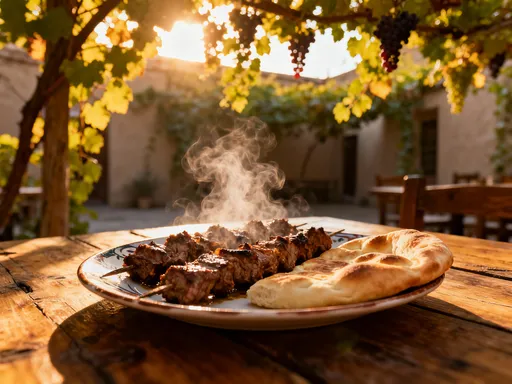
Unlike the standardized pho and spring rolls found in tourist restaurants, the street food here is bold, rustic, and deeply regional. One standout is grilled river fish, caught fresh from mountain streams and marinated in a paste of lemongrass, chili, and fermented fish sauce before being wrapped in banana leaves and charred over hot coals. Another favorite is meat skewers loaded with chunks of pork, fat, and cartilage, seasoned with wild pepper and roasted until the edges crisp. These are not delicate dishes — they are hearty, smoky, and meant to sustain people who work long hours in the fields.
What separates local food from tourist fare is both appearance and context. Dishes made for residents are often served on banana leaves or in reused plastic containers, with little regard for presentation. They are eaten standing up, shared among friends, or packed for the journey home. In contrast, food for tourists tends to be plated neatly, portioned carefully, and priced accordingly. By observing how and where people eat, a discerning traveler can identify what is truly authentic. Engaging with vendors in simple Vietnamese or through gestures can also lead to invitations to taste something special — perhaps a spoonful of homemade corn wine or a bite of sticky rice wrapped in forest herbs. These unscripted moments are where the real flavor of Sapa is found.
Cooking with the Community: A Feast in a Dao Village
One of the most profound experiences of my journey was being invited to participate in a meal preparation with a Red Dao family in Sin Chai. The Red Dao, known for their intricate embroidery and deep knowledge of herbal medicine, welcomed me into their home with quiet grace. The occasion was not a performance but a regular family gathering, and I was treated not as a guest but as a temporary member of the household. As we gathered in the open kitchen, women began chopping vegetables, men prepared the fire, and children fetched water from a nearby spring.
The centerpiece of the meal was thang co, a traditional stew historically made with horse meat, offal, and a complex blend of herbs including cilantro root, cinnamon, and Sichuan pepper. While this dish may be unfamiliar — and for some, challenging — to foreign palates, its significance lies in its communal nature. The stew is cooked for hours in a large iron pot, with each family member adding ingredients as they become available. It is then served in a single communal bowl, with everyone using their own spoon to dip in. This act of sharing from one vessel symbolizes unity and trust.
For those who prefer not to eat meat, many families now offer vegetarian versions made with tofu, mushrooms, and mountain greens, simmered in the same aromatic broth. What matters is not the ingredient but the ritual — the coming together, the slow cooking, the laughter and stories exchanged over steaming bowls. As we sat on the floor, passing dishes and sipping warm rice wine, I felt a sense of belonging that no hotel or guided tour could replicate. This was not dining as entertainment. It was food as connection, a living tradition that nourishes both body and spirit.
From Farm to Table: Harvesting Ingredients in the Highlands
To understand Sapa’s cuisine fully, one must see where it begins — in the fields, forests, and smallholdings that sustain these communities. I spent a morning with a Hmong farming family as they harvested ingredients for the week’s meals. We climbed a steep ridge to a patch of forest where women searched for wild herbs, identifying each by touch and smell. Some were used for flavor, others for medicinal properties — a leaf for digestion, a root for joint pain. Every plant had a purpose, and nothing was picked without intention.
Later, we visited a small pigpen where two black pigs rooted in the mud. These animals are not raised in industrial conditions but live semi-freely, foraging during the day and returning to shelter at night. They are slaughtered only when needed, often for a celebration or large gathering. The family showed me how every part is used: the meat for cooking, the fat for rendering into oil, the blood for making savory cakes, and the bones for broth. Even the offal is cleaned and prepared with care, turned into flavorful components rather than discarded.
This zero-waste philosophy extends to crops as well. Corn husks are used as kindling, rice straw as roofing material, and leftover grains are fed to chickens. The fields themselves are cultivated using crop rotation and natural compost, preserving soil health without chemical inputs. This sustainable approach is not a trend but a necessity — a way of life born from generations of adapting to a challenging environment. For travelers, participating in such activities offers more than insight; it fosters respect. To plant a seed, gather a herb, or help prepare a meal is to engage with a system that values balance, patience, and reciprocity.
Why This Food Journey Matters: Preserving Culture One Bite at a Time
As tourism in Sapa continues to grow, so does the risk of cultural erosion. Traditional food practices, once central to daily life, are increasingly replaced by convenience foods and tourist-oriented menus. Younger generations, drawn to urban centers and modern lifestyles, may not see the value in learning how to ferment bamboo shoots or steam rice in bamboo tubes. Without active preservation, these culinary traditions could fade within a generation. Yet, there is hope — and travelers have a role to play.
Responsible tourism can become a force for cultural sustainability. By choosing homestays over hotels, eating in village homes rather than chain restaurants, and seeking authentic experiences with respect and humility, visitors support local economies and encourage the continuation of traditional ways. When a family earns income from sharing their food and knowledge, they are more likely to pass it on. This is not about romanticizing poverty or treating people as exhibits. It is about recognizing the value of their heritage and contributing to its survival in a dignified way.
For travelers, the key is intention. Ask questions with curiosity, not judgment. Learn a few words of the local language. Accept invitations graciously and follow local customs, such as removing shoes before entering a home or not taking photos without permission. Most importantly, eat with awareness — savor the flavors, acknowledge the labor behind each dish, and express gratitude. These small acts create meaningful connections and help preserve a culture that is as rich in wisdom as it is in taste.
Sapa’s true soul isn’t just in its views — it’s in the steam rising from a bamboo tube, the laughter around a shared pot, and the taste of food made with generations of wisdom. By going beyond the guidebooks, we don’t just eat differently — we connect more deeply. And that’s a flavor worth chasing.