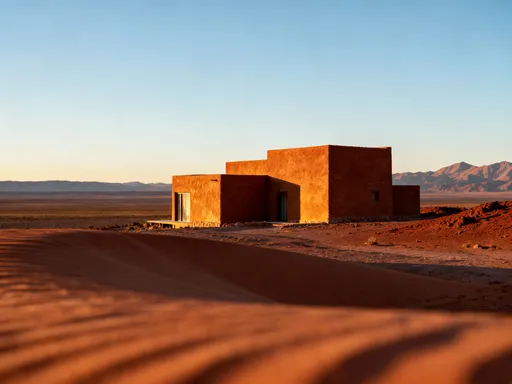
This Is What Happens When Desert Meets Design in Chile’s Atacama
You know that feeling when a place just stills your mind? The Atacama Desert did that to me. Far beyond sand and silence, I discovered structures that blend into the earth like they’ve always belonged. Built for slow travel, every lodge, observatory, and village whispers respect—for nature, for time, for craft. This isn’t just architecture. It’s conversation between land and human hands. And honestly? I didn’t expect to feel so connected in the driest place on Earth. Here, where rainfall is measured in decades rather than years, every built form feels intentional, almost sacred. The absence of excess clears not only the skyline but the mind. In Atacama, design doesn’t shout; it listens.
Arrival in San Pedro de Atacama: First Impressions of a Town Built to Breathe Slowly
Stepping into San Pedro de Atacama feels less like entering a tourist town and more like stepping into a rhythm older than tourism itself. The streets are unpaved, best explored on foot or by bicycle, and motor vehicles are restricted in the center to preserve air quality and peace. Adobe buildings with thick, sun-baked clay walls line the narrow lanes, their warm ochre hues mirroring the surrounding hills. These low-rise structures, rarely exceeding two stories, follow centuries-old building traditions of the Lickan Antay people, the indigenous inhabitants of this region. Their design is not merely aesthetic—it’s a response to extreme conditions. The dense clay walls absorb heat during the day and release it slowly at night, stabilizing indoor temperatures in a place where days can soar to 86°F (30°C) and nights plunge below freezing.
What strikes most visitors is the absence of visual noise. There are no flashing signs, no towering hotels, no aggressive advertising. Even the power lines are buried to maintain the clean silhouette of the landscape. This intentional minimalism isn’t enforced by trend, but by necessity and cultural respect. The town’s layout encourages slowness—wide eaves invite lingering conversations, shaded courtyards offer refuge from the intense sun, and open doorways suggest hospitality rather than transaction. It’s a place built not for throughput, but for presence. Travelers quickly find themselves adjusting their pace, matching the quiet pulse of the town.
The use of local materials—primarily clay, stone, and algarrobo wood—ensures that new constructions harmonize with the environment rather than dominate it. Thatched roofs made from totora reeds, traditionally used in high-altitude Andean architecture, provide insulation and a soft, organic texture that weathers gracefully. These materials are not only sustainable but culturally resonant, linking modern visitors to the deep history of human habitation in this harsh yet generous landscape. In San Pedro, architecture isn’t about making a statement. It’s about belonging.
Even the town’s most frequented spaces—the central plaza, the 17th-century church of San Pedro, the artisan market—feel grounded in daily life rather than performance. Locals gather in the mornings to prepare food, children walk to school in traditional woven bags, and elders sit in the shade sharing stories. For travelers, this authenticity is a quiet revelation. It reminds us that design, at its best, serves community and continuity. In a world increasingly shaped by speed and spectacle, San Pedro offers a different model: one where beauty arises not from novelty, but from alignment.
Staying in Harmony: Eco-Lodges That Disappear into the Landscape
In the Atacama, where every drop of water and watt of energy is precious, eco-lodges are not a luxury trend—they are a necessity. These accommodations are masterclasses in sustainable design, built not to conquer the desert but to coexist with it. Architects here work with the land, not against it, using principles of passive solar design, thermal mass, and natural ventilation to create spaces that remain comfortable without relying on energy-intensive systems. One of the most celebrated examples is Alto Atacama Desert Lodge & Spa, situated on the edge of a salt flat, where low-slung buildings follow the contours of the land, their earth-toned walls blending seamlessly into the terrain. From a distance, the lodge appears as if it has emerged from the ground rather than been placed upon it.
The design philosophy centers on minimizing environmental impact while maximizing guest connection to the surroundings. Rooms are oriented to capture morning sun and evening light, with large windows framed to act as living paintings of the desert. These openings are strategically placed to allow cross-ventilation, reducing the need for air conditioning. Thick adobe walls provide natural insulation, while shaded patios and overhangs protect interiors from the relentless high-altitude sun. Even the pathways between buildings are made of compacted gravel, avoiding concrete and allowing rainwater—however rare—to seep back into the soil.
Inside, the aesthetic is one of quiet elegance. Furnishings are crafted from reclaimed wood and natural fibers, with textiles dyed using local plants. Lighting is kept low and warm, mimicking the glow of firelight, and guests are encouraged to spend evenings under the stars rather than in brightly lit rooms. Bathrooms often feature water-saving fixtures, and many lodges use solar-heated water systems. Some, like Awasi Atacama, go further by offering private guides and personalized itineraries that emphasize mindfulness and cultural immersion over checklist tourism.
The guest experience is shaped by these design choices. Waking up to the sound of silence, stepping onto a cool stone floor, and watching the sunrise paint the distant volcanoes in shades of rose and gold—these moments are made possible not by accident, but by intention. The architecture doesn’t distract; it dissolves. It removes barriers between inside and outside, human and nature. Travelers often report a sense of calm they haven’t felt in years, not because the lodges are opulent, but because they are aligned. In a place where survival depends on balance, design becomes a form of reverence.
Sacred Geometry: Ancient Indigenous Structures Still Standing
Long before modern eco-lodges, the Lickan Antay people built with wisdom that honored both earth and sky. Their stone fortresses, ceremonial platforms, and agricultural terraces are scattered across the Atacama, silent testaments to a civilization that thrived in one of the most challenging environments on the planet. The most well-preserved of these is Pukará de Quitor, a fortified village perched on a rocky ridge just a few miles from San Pedro. Built around the 12th century, it served as both a defensive stronghold and a spiritual center. Its walls, constructed without mortar from carefully fitted stone, follow the natural contours of the land, blending defense with harmony.
The architecture of Pukará de Quitor reflects a deep understanding of geography, astronomy, and community needs. Terraced fields within the compound were used to grow quinoa and potatoes, irrigated by canals that tapped into mountain runoff—a sophisticated system given the scarcity of water. The layout of rooms and watchtowers suggests both social organization and strategic planning, with narrow passages designed to slow invaders. But beyond function, there is symbolism. The orientation of certain structures aligns with solstice sunrises and lunar cycles, indicating that the builders wove celestial knowledge into their daily lives. For the Lickan Antay, architecture was not separate from cosmology; it was a physical expression of their relationship with the universe.
Visiting Pukará de Quitor today is a humbling experience. The site is protected as a national monument, and visitors are asked to walk quietly, stay on designated paths, and refrain from touching the stones. These guidelines are not just about preservation—they reflect a growing awareness of the cultural significance of such places. For descendants of the Lickan Antay, these structures are not ruins but living connections to ancestors. Guided tours often include stories passed down through generations, emphasizing respect and continuity rather than spectacle.
Other ancient sites, such as the Tulor settlement near San Pedro, reveal circular dwellings made of stone and clay, arranged in clusters that suggest extended family units. These early villages demonstrate how social life was shaped by environmental constraints and communal values. The absence of grandiose monuments speaks volumes: this was a culture that valued balance over dominance, sustainability over display. Modern architects studying these sites often note their efficiency—how little material was used to achieve maximum resilience. In an era of climate crisis, these ancient designs offer quiet but powerful lessons in humility and adaptation.
Modern Marvels: Observatories and Scientific Outposts Designed for the Extreme
While ancient structures honored the sky through ritual, modern Atacama looks upward through science. The desert’s high altitude, low humidity, and near-total absence of light pollution make it one of the best places on Earth for astronomy. As a result, it hosts some of the world’s most advanced observatories, including the Atacama Large Millimeter Array (ALMA) and the Paranal Observatory, home to the Very Large Telescope (VLT). These facilities are feats of engineering, but their architecture is defined by restraint. Buildings are low-profile, painted in muted tones, and arranged to minimize visual disruption. The focus is not on grandeur, but on function and integration.
At ALMA, located on the Chajnantor Plateau at over 16,000 feet (5,000 meters), the environment is so extreme that human presence is carefully managed. The operations support facility is designed for efficiency and safety, with modular construction that allows for easy maintenance and expansion. Solar panels provide renewable energy, and water is recycled with extreme care. The array of 66 radio telescopes themselves are mobile, mounted on giant transporters that move them across the plateau to adjust their observational range. From a distance, they look like a fleet of silver insects gliding over the desert—a surreal but deliberate contrast to the stillness of the land.
Paranal Observatory, operated by the European Southern Observatory, is equally impressive in its understated design. The main telescope structure is embedded into Cerro Paranal, a remote mountain in the southern Atacama. The dome opens to the sky like a mechanical flower, revealing instruments capable of capturing light from galaxies billions of light-years away. The support buildings are clustered below, arranged in a circular layout that reduces wind resistance and simplifies logistics. Lighting is strictly controlled to prevent interference with observations, and all exterior lights are shielded and red-toned to preserve night vision.
What’s remarkable is how these high-tech facilities manage to coexist with the desert’s silence. There are no billboards, no visitor centers with flashing screens, no souvenir shops. Even the few public tours emphasize education over entertainment. Scientists and staff speak of the site with a kind of reverence, describing the clarity of the sky as almost spiritual. In this place, where the universe feels within reach, architecture serves not to impress, but to enable discovery. It is a reminder that human achievement is most profound when it listens more than it speaks.
Art in the Dust: Contemporary Installations Born from the Environment
The Atacama’s vast emptiness has long drawn artists seeking space, silence, and scale. Unlike urban galleries, where art competes for attention, here, a single gesture can resonate across miles. One of the most iconic works associated with the region is The Hand of the Desert (La Mano del Desierto), a 36-foot-tall steel sculpture of a hand rising from the sand. Though located near the Pan-American Highway in the northern Atacama, not within the high desert around San Pedro, it has become a symbolic counterpart to the region’s artistic spirit. Created by Chilean sculptor Mario Irarrázabal in 1992, the piece evokes isolation, vulnerability, and human presence in an indifferent landscape.
More subtle works can be found scattered across the region—ephemeral land art made from stone, salt, or wind-blown fabric. These pieces often go undocumented, known only to those who stumble upon them. Some are created by visiting artists during residencies, others by local communities as expressions of memory or protest. What unites them is a commitment to minimal impact. Materials are sourced locally, forms are temporary, and installations are designed to return to the earth over time. This ethic reflects a broader understanding: in a fragile ecosystem, even art must tread lightly.
Architects and artists alike speak of the desert as a collaborator. The intense light, shifting shadows, and constant wind become part of the work. A stone cairn may be rearranged by sandstorms; a fabric installation may fray and fade in the sun. Rather than seeing this as destruction, many interpret it as dialogue. The impermanence of these works mirrors the transience of human life against geological time. For visitors, encountering such art is often a meditative experience—a moment of pause in a landscape that already feels like a temple.
Ethical considerations guide all human interventions in the Atacama. No construction, artistic or otherwise, is permitted without environmental review. Protected areas restrict access to preserve delicate salt flats, geysers, and wildlife habitats. Even photography is approached with care—drones are banned in national parks, and guides remind visitors to leave no trace. These rules are not obstacles, but invitations to engage more deeply. They ask us to consider not just what we take from a place, but what we leave behind.
Slow Travel as Design Philosophy: How Architecture Shapes the Pace of Journey
In the Atacama, time moves differently. There are no clocks in the sky, no rush hour, no digital pings demanding attention. The built environment reinforces this slowness. Without streetlights, nights are profoundly dark, encouraging early bedtimes and pre-dawn wakefulness. Without large hotels or shopping malls, there are few distractions. Even the layout of trails and viewing platforms is designed to discourage crowding and promote contemplation. This is not accidental. Architects, planners, and conservationists have intentionally shaped the visitor experience to align with the desert’s rhythm.
Interviews with travelers reveal a common theme: a sense of mental clarity they haven’t felt in years. One woman from Toronto described her stay at an eco-lodge as “a reset for my nervous system.” A retired teacher from Melbourne said, “I came to see the stars, but I left with a new relationship to silence.” Architects echo this sentiment. “We don’t design for spectacle,” said a designer involved in the Alto Atacama project. “We design for stillness. The desert already has everything. Our job is to remove obstacles to experiencing it.”
This philosophy extends beyond physical design to the structure of itineraries. Tours are often limited to small groups, with guides trained in both ecology and mindfulness. Activities like sunrise visits to the Tatio Geysers, quiet walks through the Moon Valley, or stargazing sessions with astronomers are framed not as sightseeing, but as rituals of attention. There is no pressure to “see it all.” Instead, visitors are encouraged to return to the same spot at different times of day, to notice how light changes, how shadows shift, how the land breathes.
Psychologists studying the effects of natural environments note that open, uncluttered spaces reduce cognitive load, allowing the brain to rest and restore. In the Atacama, where visual clutter is nearly absent, this effect is amplified. The lack of artificial noise, the clarity of air, the vastness of horizon—all contribute to a state of presence. Architecture, in this context, becomes a tool for well-being. It doesn’t entertain; it enables. And in doing so, it reminds us that the deepest journeys are not measured in miles, but in moments of connection.
Designing the Future: Sustainability Lessons from the Atacama’s Built Environment
The innovations emerging from the Atacama have implications far beyond Chile. As arid regions around the world face increasing water scarcity, extreme temperatures, and energy challenges, the design principles practiced here offer a blueprint for resilient living. Water conservation is paramount: many lodges use greywater systems to irrigate native plants, and some have eliminated lawns entirely in favor of desert landscaping. Solar energy is widely adopted, with photovoltaic panels integrated into roofs and shaded areas to power lighting, heating, and cooking. Waste is minimized through composting, recycling, and strict limits on single-use plastics.
Local communities play a central role in these efforts. Indigenous knowledge is increasingly recognized as essential to sustainable development. The Lickan Antay people’s traditional irrigation techniques, for example, are being studied and adapted for modern use. Their understanding of seasonal cycles, plant resilience, and water management offers insights that complement scientific research. Collaborative projects between communities, architects, and environmental scientists are leading to new models of co-design, where solutions emerge from dialogue rather than imposition.
These practices are already influencing architecture in other dry regions, from the American Southwest to the Horn of Africa. The idea that buildings should respond to climate, not resist it, is gaining ground. Passive cooling, natural materials, and low visual impact are no longer niche concepts but necessities. The Atacama shows that sustainability is not about sacrifice, but about alignment. When design respects the limits of a place, it becomes more beautiful, more functional, and more enduring.
For travelers, the lesson is clear: the most meaningful destinations are those where human presence enhances, rather than diminishes, the natural world. The Atacama doesn’t need us to build. But when we do, let it be with care, with humility, with reverence. Let our structures be quiet, our footprints light, our intentions clear. In a time of ecological uncertainty, this desert offers not just escape, but guidance.
When the Earth Speaks, Architecture Listens
The Atacama Desert teaches a rare kind of listening. Here, where silence is not absence but presence, every structure—from ancient stone fort to modern observatory—speaks of respect. The architecture of this region does not dominate; it dialogues. It acknowledges heat, wind, water, and time as co-creators. It invites slowness, not as a luxury, but as a necessity. In doing so, it offers a model not just for building, but for being.
For travelers, the invitation is to seek places where design serves place, not ego. To choose lodgings that blend rather than boast, guides who listen as much as they speak, and journeys that prioritize presence over productivity. The desert does not reward haste. It rewards attention. And in return, it offers clarity, connection, and a deep sense of belonging.
As we face a future shaped by climate change and disconnection, the lessons of Atacama are more vital than ever. Architecture need not be a declaration of power. It can be a gesture of humility. A window, not a wall. A pause, not a performance. In the end, the most enduring designs are not those that stand out, but those that belong. And sometimes, the driest place on Earth can make us feel most alive.