Whispers of Color: Discovering Sucre’s Soul Through Art and Silence
Nestled in the Andean highlands, Sucre, Bolivia, reveals a world where colonial elegance dances with indigenous resilience. Walking its whitewashed streets, I didn’t just see art—I felt it in murals that tell forbidden stories, in markets echoing with Quechua rhythms, and in silent courtyards where history breathes. This isn’t just a destination; it’s a living canvas. The city’s altitude cradles rather than overwhelms, and its architecture speaks of centuries folded gently into the present. If you're craving authenticity beyond postcards, Sucre doesn’t disappoint—it transforms. It invites not just sightseeing, but soul-searching, offering a rare kind of travel where beauty is not displayed, but lived.
First Glimpse: Arrival in a City That Time Polished, Not Forgot
Descending into Sucre at dawn, the morning light spills across terracotta rooftops and whitewashed walls, casting long shadows that stretch like fingers across the cobblestone streets. The air is crisp—crisper than expected at 2,810 meters above sea level—and carries a quiet clarity, as if the city itself has been breathing slowly for centuries. At the modest bus station on the edge of town, travelers step into a world that feels both familiar and foreign: familiar in its colonial symmetry, foreign in its deep-rooted cultural pulse. Unlike other highland cities where altitude can strike with sudden dizziness, Sucre’s elevation reveals itself gradually, a subtle presence that reminds you to slow down, to breathe deeper, to pay attention.
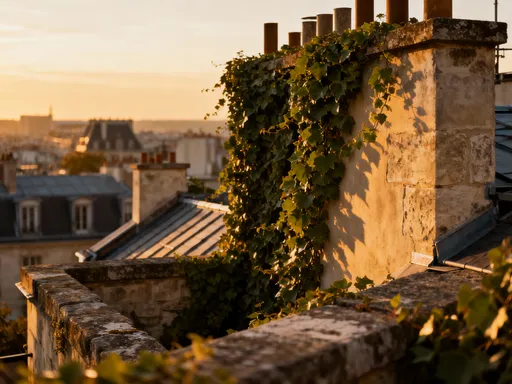
The city unfolds with architectural grace. Rows of colonial buildings, painted in soft hues of white, cream, and pale ochre, line the hillsides in neat, cascading order. Their red-tiled roofs slope gently, resembling pages folded in prayer. Bougainvillea spills from wrought-iron balconies, their fuchsia blooms contrasting vividly against the pale facades. This is not a reconstructed heritage site or a tourist-themed facade; Sucre is a living city, preserved not by force but by pride. Its streets are not silent museums—they are walked, lived in, and loved by those who call it home. The city earned its UNESCO World Heritage status in 1991 not merely for its beauty, but for its enduring cultural continuity, a testament to a society that has evolved without erasing its past.
At the heart of it all lies Plaza 25 de Mayo, a wide, open square where locals gather in the morning sun, children chase pigeons between stone fountains, and vendors sell steaming cups of api, a thick purple corn drink sweetened with cinnamon. Surrounding the plaza stand the Catedral Metropolitana, with its neoclassical façade and towering bell towers, and the Palacio Quemado, once the seat of Bolivia’s government. These buildings are more than landmarks—they are symbols of a nation’s layered identity, where political and spiritual life have long intertwined. The plaza is not a stage for performance; it is a stage for life. Here, the past is not buried—it is present in every stone, every conversation, every shared silence.
The Living Palette: How Murals Tell Bolivia’s Truths
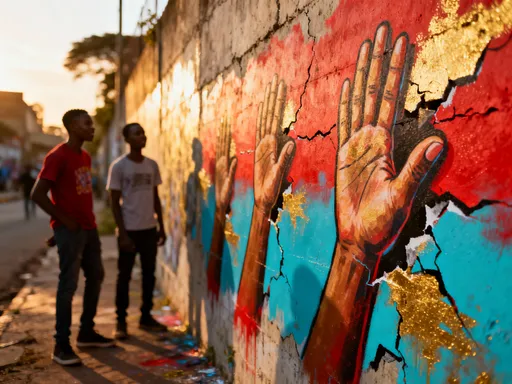
Walk beyond the central plaza, and Sucre reveals another layer of its soul: its murals. These are not mere decorations or attempts at beautification. They are declarations. In neighborhoods like El Calvario and the bustling downtown corridors, large-scale paintings cover entire walls, transforming alleyways into open-air galleries of memory and resistance. One mural depicts the 1952 National Revolution, where miners and peasants rose against oppression, their fists raised, their faces etched with determination. Another honors Bartolina Sisa, the indigenous Aymara leader executed for rebellion, her image painted in bold strokes, her gaze unwavering.
These murals are created by local collectives—artists who are often descendants of the very communities they portray. They use pigments sourced from the land: reds from mineral-rich clay found in the nearby valleys, ochres ground from stones collected near riverbeds, blues derived from natural indigo. The colors do not fade easily, just as the stories they tell do not disappear. Each mural is layered with symbolism. Weaving patterns, reminiscent of traditional Andean textiles, represent the ayllu—the communal kinship system that binds families and villages together. Sun motifs, radiating outward in concentric circles, pay homage to Inti, the Inca sun god, a reminder of spiritual roots that predate colonialism.
What makes these murals powerful is their accessibility. They are not confined to galleries or behind ropes. They exist on the sides of homes, above market stalls, along school walls—visible to everyone, especially those who live with the history they depict. They serve as informal education, teaching younger generations about their ancestors’ struggles and triumphs. For visitors, they offer a rare opportunity to witness history not as a distant narrative, but as a living, breathing dialogue between past and present. Art in Sucre is not passive. It is a form of literacy, a way of remembering, and a quiet act of defiance against forgetting.
Museums with Breath: Where Culture Isn’t Curated, It Lives
In many cities, museums are silent, sterile spaces—temples of preservation where culture is displayed under glass. In Sucre, museums breathe. They are not frozen in time but remain active participants in daily life. The Museo de la Recoleta, perched on a hill overlooking the city, exemplifies this. Housed in a former 17th-century convent, the building retains its spiritual aura. Arched cloisters frame panoramic views of the valley below, and the scent of eucalyptus drifts through open windows. Inside, colonial religious art—gilded altarpieces, wooden saints draped in velvet—shares space with quiet meditation corners where locals come to reflect, read, or simply sit in stillness. The museum does not separate art from spirituality; it embraces both as inseparable threads of cultural identity.
Another cornerstone of Sucre’s cultural landscape is the Casa de la Libertad, the very room where Bolivia’s declaration of independence was signed in 1825. Stepping into this modest hall, one is struck by its simplicity. The original document rests under soft lighting, its ink faded but legible, the signatures of revolutionary leaders preserved in delicate script. Guides recount the tense debates, the whispered hopes, the moment when a nation began to imagine itself free. Unlike grandiose monuments elsewhere, this space feels intimate, almost sacred. It does not glorify revolution—it honors the courage it took to begin one.
Elsewhere, smaller galleries focus on textile traditions. At the Museo de Arte Indígena, visitors encounter pre-Columbian weaving techniques still practiced today. Local artesanas demonstrate how to spin alpaca wool using the pushka, a hand-held spindle that has been used for centuries. They invite guests to try, guiding hands through the rhythmic motion of twisting fiber into thread. These interactions are not staged performances; they are genuine exchanges. The women speak of patterns passed down from grandmothers, of colors that signify mountain seasons, of textiles that once served as maps and records. In these moments, culture is not observed—it is shared, taught, and carried forward.
Markets as Theaters: Calasaya and Juvenile as Cultural Stages
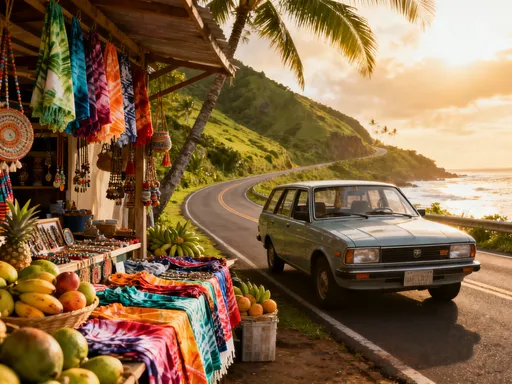
If Sucre’s museums are living spaces, its markets are theaters of daily life. Mercado Calasaya, the city’s largest, is a sensory symphony. The air is thick with the scent of roasting corn, dried quinoa, and ch’arki—llama or alpaca meat cured in the highland sun. Stalls overflow with pyramids of potatoes in every color imaginable: deep purple, golden yellow, speckled red. Vendors, many wearing traditional bowler hats and woolen shawls fastened with intricately carved tupus (brooches), call out prices in Quechua and Spanish, their voices rising above the rustle of plastic bags and the clatter of scales.
This is not a market created for tourists. It is where Sucre’s residents buy their groceries, where grandmothers haggle over the price of fresh herbs, where cooks select spices for the day’s stew. Yet visitors are not excluded—they are welcomed, observed, sometimes gently corrected when mispronouncing a word. The authenticity is palpable. There are no plastic trinkets or imported souvenirs here. Every item has purpose and origin. A basket of medicinal herbs is explained in detail: muña for digestion, arrayán for respiratory relief. These are not exotic curiosities—they are everyday remedies, trusted across generations.
A short walk away, the Juvenile Market offers a different rhythm. Run largely by youth cooperatives, this space blends tradition with innovation. Stalls display hand-stitched polleras, the voluminous skirts worn in indigenous communities, their layers of fabric embroidered with floral and geometric patterns. Nearby, artisans sell hand-painted Andean masks used in festivals, their exaggerated features capturing spirits and ancestors. One booth features notebooks bound in recycled leather, their pages made from paper pulp processed by local teens in a vocational program. These young entrepreneurs speak proudly of their work, of how they balance school with craft. The Juvenile Market is not just a place to shop—it is a space of hope, where tradition is not preserved as a relic, but reimagined as a livelihood.
Workshops of the Hand: Learning to Create, Not Just Consume
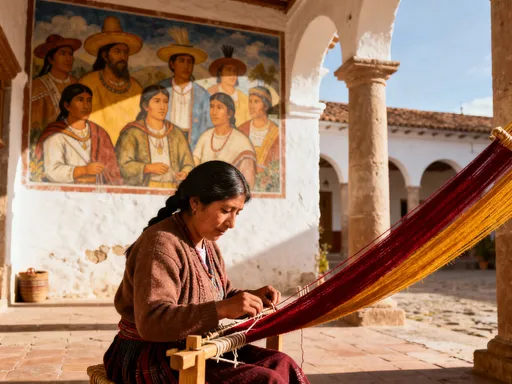
In an age of fast tourism—where destinations are checked off lists and photos uploaded within hours—Sucre offers a different invitation: to create, not just consume. Across the city, small workshops allow travelers to step into the role of apprentice. In a quiet studio near the university district, a group of visitors gathers around a Quechua weaver named Rosa. She demonstrates the backstrap loom, a simple yet profound tool that wraps around the body, using the weaver’s own tension to hold the threads taut. The loom is portable, ancestral, and deeply personal—many women carry theirs from village to village, generation to generation.
Rosa explains that each pattern has meaning. A zigzag line may represent the path of a river; a diamond shape could symbolize the Andes themselves. “We don’t just make cloth—we make memory,” she says, her hands moving with practiced ease. Participants take turns sitting at the loom, feeling the resistance of the warp threads, struggling to maintain even tension. It is humbling work. What looks simple is intricate, requiring patience and rhythm. By the end of the session, no one has created a finished piece—but everyone has touched a tradition that spans centuries.
Outside the city, in artisan colonies like those near the village of Tarabuco, ceramic workshops follow similar principles. Potters use foot-powered wheels, their legs pumping steadily as their hands shape wet clay into bowls, jars, and ceremonial vessels. Kilns are fired with wood and dried dung, methods unchanged for generations. One artisan specializes in mates, gourds carved with ancestral glyphs—spirals for eternity, stepped patterns for the terraced mountains. Visitors are encouraged to try their hand, to feel the cool slip of clay, to understand that creation is not instant, but earned. These workshops do more than teach skills—they foster respect. They shift the traveler’s role from observer to participant, from consumer to collaborator.
Beyond the Center: Indigenous Communities and Cultural Continuity
To truly understand Sucre, one must leave its polished center and journey into the surrounding countryside. A short colectivo ride—on a minivan packed with locals, schoolchildren, and bags of grain—leads to villages like Yamparáez or Icla. Here, life unfolds at a different pace. Homes are built from stone and adobe, their oval shapes designed to withstand highland winds. Thatched roofs, made from dried grass, slope gently, blending into the landscape. Chickens peck at the dirt, and llamas graze on the hillsides, their silhouettes sharp against the sky.
These communities do not perform their culture for outsiders. They live it. On festival days, music fills the air—zampoñas (panpipes) and bombos (drums) playing ancient melodies that tell of harvests, rains, and ancestors. Visitors are sometimes invited to join circle dances, where steps move in rhythm with the earth. Homestays, run by families trained in community tourism, offer shared meals of chuño (freeze-dried potatoes), quinoa soup, and fresh cheese. Evenings are spent around the fire, listening to stories told in Quechua, translated softly by a daughter or nephew.
The emphasis here is reciprocity. Travelers are not passive guests; they are asked to help—kneading dough for bread, gathering firewood, or simply sharing stories in return. There is no entry fee, but a request: to respect, to listen, to leave no trace. These experiences are not commodified. They are invitations—humble, generous, and deeply human. They remind us that cultural preservation is not about freezing a moment in time, but about continuing a way of life with dignity and pride.
Why Sucre Matters: A Quiet Rebellion Against the Tourist Machine
In a world where travel is often measured by checklists and Instagram likes, Sucre stands as a quiet rebellion. It does not dazzle with neon lights or promise adrenaline-fueled adventures. It whispers. It asks you to sit, to listen, to notice the way light falls on a painted wall, the way a grandmother hums while weaving, the way a market vendor smiles when you finally pronounce api correctly. This city teaches that culture is not something to be consumed like a meal, but something to be entered into—slowly, respectfully, with open hands and an open heart.
Sucre’s art, its markets, its people—they are not relics. They are alive, evolving, resilient. They represent a different model of tourism, one that values depth over distraction, connection over convenience. When you walk through its streets, you are not just seeing Bolivia—you are experiencing a philosophy of living, where history is not behind glass, but woven into daily life. The murals, the textiles, the quiet courtyards—they are all sentences in a story that has been unfolding for centuries, and now, for a brief moment, you are part of it.
To visit Sucre is not to collect experiences, but to grow from them. It is to learn that beauty does not have to shout to be felt, that silence can be as powerful as song, that a single thread in a woven cloth can carry the weight of memory. In a time when so much of travel feels fleeting, Sucre offers something rare: authenticity that is not performed, but lived. It does not ask for your admiration. It asks for your attention. And in return, it offers transformation—not of the place, but of the traveler. The journey ends, but the whispers remain.