You Won’t Believe What I Found in Sana’a — Art Everywhere, Honestly
Walking through Sana’a feels like stepping into a living canvas. The old city’s towering houses, painted with ancient geometric patterns, rise like sculptures against the mountain sky. I didn’t expect art to be everywhere—in door carvings, window frames, even the way light hits the alleys at dawn. This isn’t just architecture; it’s centuries of craftsmanship breathing through stone and wood. Sana’a doesn’t display art—it lives as art. And from every viewpoint, the city tells a story worth seeing with your own eyes.
First Glimpse: The City That Looks Like a Painting
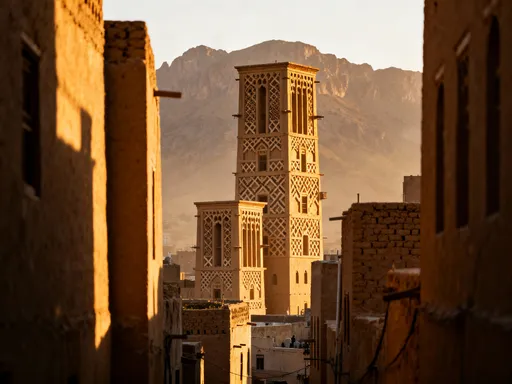
Arriving in Sana’a, even from the air, the city announces itself with an unexpected grace. Perched over 2,200 meters above sea level in a highland basin surrounded by rugged mountains, the Yemeni capital greets visitors with a skyline unlike any other in the Arab world. The Old City emerges like a cluster of sandstone towers, their facades glowing amber in the morning sun. These are not modern skyscrapers but centuries-old multi-story homes, some rising up to eight stories high, built from rammed earth and stone. From a distance, the city resembles a painted fortress, its verticality softened by the natural contours of the land. Each building is a testament to vernacular architecture—designed not for grandeur but for resilience, climate adaptation, and communal living.
The immediate visual impact of Sana’a is one of harmony. Unlike cities shaped by industrialization and concrete sprawl, this urban landscape unfolds with rhythm and intention. The dense network of narrow alleys channels breezes upward, providing natural cooling in a region where summer temperatures can soar. But more than its functional brilliance, it is the aesthetic unity that strikes the observer. The buildings are not uniform, yet they speak a shared visual language: white lime wash accents, geometric window frames, and decorative bands of black basalt stone that outline arches and corners. This contrast—of light earth tones against dark volcanic stone—creates a patterned effect that feels both intricate and serene.
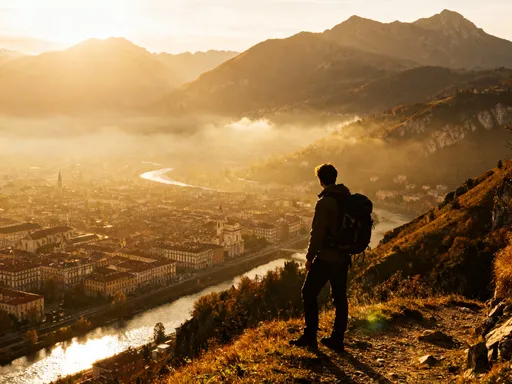
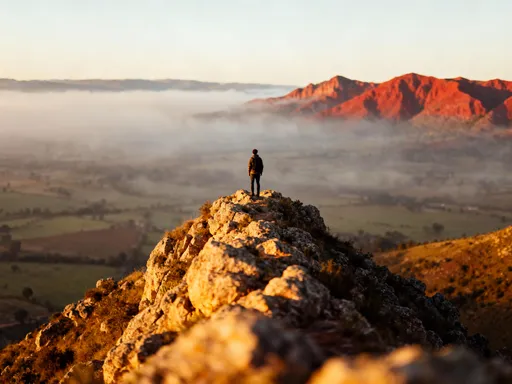
One of the most powerful ways to appreciate Sana’a’s artistry is from elevated vantage points. Whether standing near Al-Qahira Castle or hiking the nearby hills at sunrise, the city reveals itself in layers. The rooftops form a patchwork, with small courtyards and open terraces where families gather. From above, the urban fabric resembles a tapestry, woven with care over generations. The city’s elevation enhances this experience—cool air, clear skies, and panoramic views allow the eye to trace the flow of streets, the clustering of homes, and the subtle gradations of color that shift with the sun. For many travelers, this first glimpse dismantles long-held assumptions about Yemen, replacing images of conflict with a profound sense of cultural richness and enduring beauty.
Walled Wonders: Exploring the Old City’s Artistic Soul
Enclosed by a partially preserved ancient wall, the Old City of Sana’a has been recognized as a UNESCO World Heritage Site since 1986, a designation that underscores its global cultural significance. Within its historic boundaries, over 6,000 traditional houses stand as monuments to Islamic architectural heritage. These are not relics frozen in time but lived-in spaces where families continue daily routines amidst centuries-old craftsmanship. What makes Sana’a exceptional is that its art is not confined to museums or galleries—it is embedded in the very structure of everyday life. Every doorway, every window, every interior courtyard is an expression of aesthetic tradition passed down through generations.
Among the most iconic features of Sana’ani homes are the qamariya, or stained-glass windows, typically installed in the outer walls of upper floors. These circular or arched windows are made from colored glass pieces set in intricate gypsum frames, often arranged in geometric star patterns. When sunlight filters through, it casts kaleidoscopic patterns onto interior walls and floors, transforming private spaces into chambers of shifting light and color. These windows serve both functional and symbolic purposes: they allow ventilation and illumination while preserving privacy, a core value in traditional Yemeni society. Yet their beauty transcends utility—the craftsmanship involved in cutting glass and carving plaster is a form of devotional artistry, reflecting the Islamic tradition of avoiding figurative representation in favor of abstract and mathematical design.
Equally striking are the wooden mashrabiya balconies that project from upper stories. Carved from teak or acacia wood, these latticed enclosures provide shaded outdoor space while maintaining modesty. Each balcony is unique, with patterns ranging from simple interlocking grids to complex floral motifs inspired by nature. The carving process is meticulous, requiring months of labor by skilled artisans. These elements are not merely decorative—they are climate-responsive, allowing airflow while diffusing direct sunlight. In a city where temperatures fluctuate dramatically between day and night, such architectural intelligence is essential. Yet, their enduring presence speaks to a deeper truth: in Sana’a, functionality and beauty are inseparable.
The geometric and floral patterns that adorn walls, ceilings, and doors are more than ornamental—they carry symbolic meaning rooted in Islamic philosophy. Repeating patterns represent the infinite nature of creation, while floral designs evoke paradise gardens described in the Quran. Calligraphic inscriptions, often verses from the Quran, are integrated into architectural details, turning homes into spaces of spiritual reflection. To walk through the Old City is to move through a living scripture of form and proportion. This integration of faith, art, and daily life challenges the Western separation of sacred and secular, offering instead a holistic vision of culture where beauty serves both the eye and the soul.
Up Close: Doors, Walls, and Hidden Details That Speak Volumes
To truly appreciate Sana’a’s artistry, one must slow down. The city reveals its secrets not in sweeping vistas alone but in the quiet details that emerge at eye level. Nowhere is this more evident than in the craftsmanship of its doors. These are not mere entrances but monumental statements—some over three meters tall, forged from dense hardwood and reinforced with iron studs or bands. Many are carved with intricate patterns: interlocking circles, rosettes, and arabesques that spiral outward like ripples in water. The heft of these doors speaks to their historical role as protectors of family and wealth, but their ornamentation transforms them into works of public art.
The materials used in Sana’ani decorative work are locally sourced and deeply connected to the region’s geology and climate. Gypsum, extracted from nearby hills, is the primary medium for interior and exterior reliefs. When mixed with water and molded, it dries into a fine, smooth surface ideal for carving. Artisans use chisels and styluses to etch delicate patterns into the soft plaster, a technique that has changed little over centuries. Natural pigments—ochre, indigo, and lime—are used to tint walls and accents, producing hues that age gracefully under the sun. These earth-based materials not only harmonize with the landscape but also regulate indoor humidity, contributing to the buildings’ longevity.
Despite the challenges posed by time and environmental wear, restoration efforts are underway, led by local craftsmen who have inherited their skills from ancestors. In quiet corners of the souq, one can observe masons repairing damaged façades, woodcarvers replicating lost balcony panels, and plaster artists restoring interior friezes. These artisans often work without modern tools, relying on hand-forged instruments and traditional methods. Their dedication is not driven by tourism but by cultural pride and a sense of duty. Many view their work as a form of preservation—not just of buildings, but of identity.
One of the most rewarding ways to experience Sana’a is through unhurried exploration. While guided tours offer valuable context, the deepest impressions come from wandering without agenda. A side alley may reveal a forgotten courtyard with a fountain carved in the shape of a lotus. A cracked wall might expose layers of plaster, each representing a different era in the home’s history. These moments of discovery are not staged—they are gifts of attention. The city rewards patience, inviting visitors to see not just with their eyes but with their senses. The scent of frankincense from a nearby shop, the sound of hammering from a carpenter’s workshop, the coolness of stone underfoot—all contribute to an immersive experience that transcends sightseeing.
From Below to Above: The Best Viewpoints in Sana’a
To understand Sana’a’s urban artistry, one must see it from multiple perspectives—from the intimacy of its alleys to the grandeur of its panoramic outlooks. Among the most celebrated vantage points is Al-Qahira Castle, perched on a rocky outcrop to the west of the Old City. Though much of the original structure dates back to the 17th century, the site has been occupied since antiquity. From its ramparts, visitors can gaze across the entire historic district, where the sea of ochre rooftops stretches toward the encircling mountains. On clear mornings, the air is crisp and the light soft, casting long shadows that accentuate the texture of the buildings. This is the moment when the city feels most like a painting—alive, layered, and luminous.
Another ideal spot is the area around Bab al-Yemen, the grand southern gate of the Old City. Here, the convergence of narrow streets and towering facades creates a dramatic urban canyon. Standing just outside the gate and looking inward, one can appreciate the verticality of Sana’a’s architecture—the way buildings lean slightly toward each other, as if in conversation. During the early hours, when traffic is light and the market has not yet fully awakened, the play of light and shadow along the walls reveals subtle carvings and faded inscriptions. Photographers often gather here, not to capture people, but to frame the architecture in its most serene state.
For those willing to walk a bit farther, the hills surrounding Sana’a offer unparalleled perspectives. Local residents sometimes hike to elevated terraces used for farming or relaxation, where makeshift stone benches provide quiet observation points. From these heights, the city appears as a living organism—pulsing with life, yet rooted in timeless design. The mountainous basin in which Sana’a sits enhances the sense of depth and enclosure, making the urban landscape feel both protected and majestic. The topography also influences the city’s microclimate, contributing to the preservation of its earthen structures by limiting extreme temperature swings.
For respectful photography, timing and sensitivity are essential. Early morning and late afternoon offer the best light, when the sun strikes the buildings at oblique angles, highlighting textures and colors. Visitors are encouraged to ask permission before photographing residents, especially women, and to avoid intrusive behavior. Many locals welcome interest in their heritage, but the city is not a stage—it is a home. By approaching with humility and awareness, travelers can capture the essence of Sana’a without disrupting its rhythm. The most powerful images are often the quiet ones: a single window catching the last light, a child passing beneath a carved arch, the silhouette of a minaret against a twilight sky.
Art That Lives: Craftsmen Keeping Tradition Alive
Beneath the grandeur of Sana’a’s architecture is a living network of artisans whose skills sustain the city’s aesthetic legacy. In the labyrinthine souqs, one can find woodcarvers shaping new mashrabiya panels, masons preparing gypsum mixtures, and metalworkers forging door hinges with traditional motifs. These craftsmen are not performing for tourists; they are repairing homes, building new rooms, and maintaining the functional integrity of the city. Their workshops are often small, tucked into alleyways, lit by natural light, and filled with the sounds of chisels and saws. The tools they use—many of them handmade—are passed down through families, some bearing the marks of decades of use.
The transmission of these skills follows an apprenticeship model, where young learners work alongside masters for years before achieving independence. A boy as young as ten might begin by sanding wood or mixing plaster, gradually progressing to carving simple patterns under supervision. This system ensures that knowledge is preserved not in textbooks but through practice and observation. The relationship between master and apprentice is often familial or community-based, reinforcing social bonds and cultural continuity. In a world increasingly dominated by mass production, this model stands as a quiet resistance to disposability and homogenization.
Yet, these artisans face significant challenges. Economic hardship, limited access to materials, and the impact of regional instability have strained the traditional building sector. Some craftsmen have been forced to abandon their trades or seek work abroad. Others struggle to find apprentices, as younger generations are drawn to modern professions or emigration. Despite these pressures, many remain committed to their craft, viewing it as a sacred trust. International preservation efforts, including those by UNESCO and local NGOs, have provided some support, funding restoration projects and training programs. However, long-term sustainability depends on renewed appreciation—both within Yemen and beyond—for the value of handmade heritage.
Supporting artisan markets is one of the most direct ways to contribute to this cultural resilience. When travelers purchase small handicrafts—carved boxes, plaster ornaments, or textiles with traditional patterns—they participate in a chain of preservation. These items are not souvenirs in the commercial sense but fragments of a living tradition. Each purchase affirms the dignity of the maker and the relevance of the craft. More importantly, it signals that the world sees and values Yemen not only for its struggles but for its enduring beauty and creativity.
Beyond the Old City: Modern Expressions in a Historic Capital
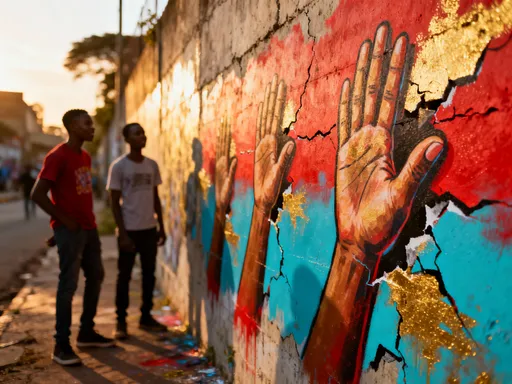
While the Old City remains the heart of Sana’a’s artistic identity, the capital’s creative spirit extends into its newer districts. Away from the UNESCO-protected zone, one can find murals, painted walls, and community art projects that reflect contemporary Yemeni life. These works are often understated, appearing on school walls, market facades, or public buildings. Unlike the ornate craftsmanship of the old quarters, this modern art speaks in bolder, simpler forms—depicting children playing, doves in flight, or abstract patterns inspired by traditional motifs. Though rarely promoted to tourists, these expressions reveal a living culture in dialogue with its past.
Young artists in Sana’a are increasingly blending heritage with modern themes. Some use calligraphy as a base, reinterpreting Quranic verses through digital media or mixed materials. Others incorporate geometric patterns into fashion design or graphic art, creating bridges between ancient aesthetics and present-day identity. Galleries and cultural centers, though modest in size, serve as quiet hubs for this exchange. Exhibitions may feature paintings, photography, or installations that address resilience, memory, and hope—themes that resonate deeply in a society shaped by hardship.
What is striking is not the contrast between old and new, but their quiet connection. A mural might use the same color palette as a qamariya window; a modern doorway might echo the proportions of a 15th-century home. This continuity suggests that tradition is not static—it evolves while honoring its roots. For visitors, recognizing these links enriches the experience, revealing Sana’a not as a museum piece but as a city in motion, where art is both inherited and reinvented.
Why Sana’a Changes How You See Art in Travel
Sana’a challenges the conventional way we think about art in travel. In most destinations, art is something we go to see—a painting in a museum, a sculpture in a plaza, a performance in a theater. But in Sana’a, art is not separate from life; it is woven into the fabric of existence. The city itself is the masterpiece. To walk its streets is to move through a three-dimensional gallery where every surface tells a story. This realization shifts the traveler’s role from observer to participant. One does not merely look at art in Sana’a—one inhabits it.
The emotional impact of this experience is profound. In a world often defined by transience and digital reproduction, Sana’a offers authenticity and continuity. To witness craftsmanship that has survived centuries, maintained not by institutions but by families and communities, is to see resilience in its most tangible form. It is a reminder that culture is not fragile—it is adaptive, persistent, and deeply human. For many visitors, this encounter dismantles stereotypes about Yemen, replacing reductive narratives with a nuanced appreciation of its people and heritage.
Sana’a invites travelers to seek destinations where art is not displayed—it is lived. It calls for a slower, more attentive way of moving through the world, one that values depth over speed, connection over consumption. In doing so, it transforms travel from a series of sights into a series of revelations. To visit Sana’a is not just to see a city—it is to understand that beauty can endure, that tradition can thrive, and that every stone, every carving, every ray of light holds a story worth honoring.
Sana’a reshapes your definition of art. It’s not found in galleries behind glass but in the rise of a wall, the curve of a window, the silence between sunlit alleys. To visit is not just to see, but to witness centuries of expression standing tall against time. Choosing such destinations transforms travel from sightseeing into soul-seeing—where every viewpoint tells a human story worth honoring.